Immanuel Kant
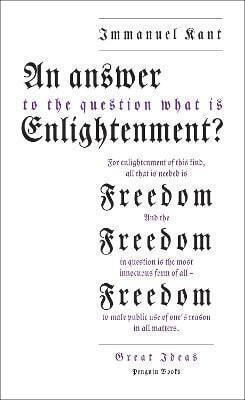
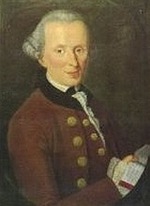
Immanuel Kant was born in April 1724 in Königsberg. From 1732 to 1740, he attended the Fridericianum College, and in 1740, he enrolled at the University of Königsberg. Although officially registered in the Theology faculty, he dedicated himself primarily to the study of philosophy and physics. In 1747, he published his first work: "Thoughts on the True Estimation of Living Forces." From 1747 to 1756, Kant supported himself by giving private lessons, and in 1755, he began lecturing at the university as an unpaid lecturer. He published an article on earthquakes, prompted by the Lisbon earthquake, and "Universal Natural History and Theory of the Heavens," which is his most significant contribution to the field of natural sciences. From 1760, Kant began engaging with the most contentious issues of the Enlightenment. In 1759, he wrote "An Essay on Optimism," in 1762, "On the False Subtlety of the Four Syllogistic Figures," in 1763, "The Only Possible Argument in Support of a Demonstration of the Existence of God" and "Attempt to Introduce the Concept of Negative Magnitudes into Philosophy," in 1764, "Observations on the Feeling of the Beautiful and Sublime" and "Essay on the Diseases of the Mind," and in 1766, "Dreams of a Spirit-Seer, Illustrated by Dreams of Metaphysics." In 1770, Kant was appointed as a full professor, taking the chair of metaphysics and logic. Upon his appointment, he published the renowned study "On the Form and Principles of the Sensible and Intelligible World." Eleven years later, "Critique of Pure Reason" was published, a challenging text, and in 1783, Kant published "Prolegomena to Any Future Metaphysics" in a more accessible form, including the main ideas of "Pure Reason." With the texts "What is Enlightenment?" and "Idea for a Universal History with a Cosmopolitan Purpose" in 1784, Kant began to intervene directly in the debate surrounding Enlightenment philosophy. The following year, 1785, saw the publication of the first of his major works dedicated to ethics: "Groundwork of the Metaphysics of Morals." Until his death in 1804, he published a plethora of works.