Aristotelis Valaoritis
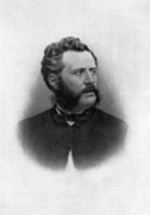
Aristotelis Valaoritis
Aristotelis Valaoritis (1824-1879). Aristotelis Valaoritis was born in Lefkada in 1824, the son of businessman and senator Ioannis Valaoritis and Anastasia, née Typaldos Foresti. He received his early education at the Lyceum of Lefkada (1830-1837), then attended the Ionian Academy in Corfu (1838-1841) and traveled to Italy and free Greece (1841-1842). He pursued further studies in Geneva (where he earned a degree in Letters and Sciences from the local college), Paris (in law), and finally Pisa, where he was awarded a doctorate in law from the university there. In 1846, he contracted typhoid fever and returned to his hometown. He subsequently traveled to Italy and Austria, where he risked his life participating in actions supporting Greek liberation. During this time, he studied German philosophy and in 1847 had already published his first poetry collection titled "Stichourgimata" in Corfu. This was followed by a period of wandering in Italy, mainly in Venice. There, he participated in student movements and met Emilios Typaldos' daughter, Eloisia, whom he married in 1852. From this marriage, he had three daughters (Maria, who died in infancy in 1855, another Maria, who died in 1866, and Nathalia, who died in 1875 in Venice) and two sons, Nano and Emilios. After his marriage, he traveled to Europe for a year, and upon returning to Lefkada, he supported the revolutionary movement in Epirus with men and money, which displeased the then British commissioner, forcing him to flee to Italy again. In 1856, both his father and mother passed away. In 1857, he published his second poetry collection titled "Mnemosyna," which was honored by King Otto with the Gold Cross of the Redeemer. That same year, he had his second son, Emilios, and was elected as a member of parliament for Lefkada in the Ionian Parliament, a position he held from 1857 to 1864. In 1864, he visited Athens with the president of the Ionian Parliament and other prominent politicians and drafted the plan for the Union resolution. His appearance at the National Assembly was met with great success. He was elected twice as a member of parliament in the Koumoundouros government (1865 and 1868), but he refused to take on ministerial duties. After the 1868 elections, disillusioned with politics, he withdrew and isolated himself on Madouri, a small island near Lefkada. There, he composed the poems "Diakos" and "Astrapogiannos," which he published together in 1867. At the invitation of the rector of the University of Athens in 1871, he wrote and successfully recited a poem for the Patriarch at the unveiling of his statue. He died in 1879. Shortly before his death, he wrote the first three songs of "Fotinos," a work that remained unfinished due to his passing. "Fotinos" was included in the second collected volume of his works published posthumously in 1891. He also wrote a few translations ("The Lake" by Lamartine, "The Thirty-Third Song of Hell" by Dante, etc.) and published articles on political and historical issues. In Valaoritis' work, the linguistic style of the Ionian School meets that of the Athenian. His poetic works are written in simple language, while his prose is in Katharevousa. The epic nature of his works, as well as his struggles for the Homeland, earned him the honorary title of national poet while he was still alive. Critics were divided in the case of Valaoritis, ranging from complete acceptance (Palamas, Roides, Sikelianos) to complete rejection (Polylas, Panas, Vernardakis). For more biographical details on Aristotelis Valaoritis, see "Biographical Chronology of Aristotelis Valaoritis" in "Responsibility Notebooks," issue 10, 1979, Athina Georganta - G.P. Savvidis, "Uncollected Texts of Valaoritis II (and Unknown Information about His Life and Work)," "Palimpseston" magazine, issue 3 (Heraklion, Crete), 12/1986, Gerasimos Grigoris, "Chronicle of the Life and Works of Aristotelis Valaoritis: The Lyre's Armatolos 1824-1879; Life, Works, Anthology, Criticism, Images, Bibliography," Athens, Society of Lefkadian Studies, 1975, Sofia Mavroeidi - Papadaki, "Valaoritis Aristotelis," in "Great Encyclopedia of Modern Greek Literature," vol. 3. Athens, Haris Patsis, [1968], Savvidis G.P., "Ar. Valaoritis and His Era, 'Fotinos' for Us Today"; Introduction to Valaoritis's 'Fotinos,' Athens, 1970, and P[etros] Ch[aris], "Aristotelis Valaoritis," "Nea Estia" 106, year NG', Christmas 1979, no. 1259, pp. 4-40. (Source: Archive of Greek Writers, EKEBI)
 Greek Fiction Books
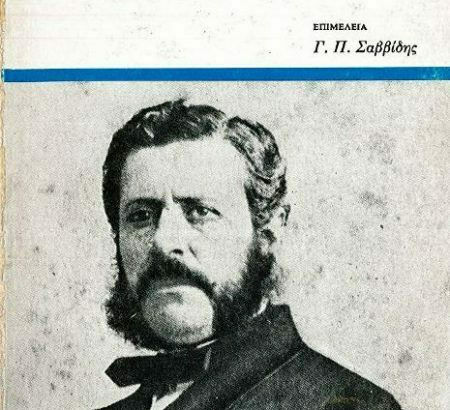
Φωτεινός, Series, new Hellenic Library 7
Aristotelis Valaoritis, 2013 , Estia Bookstore
0
 Greek Fiction Books
Κλασικές Ιστορίες Τρόμου απ' όλο τον Κόσμο
Collective Work, 2016 , Aeolus
from7,20 € at 10 stores0