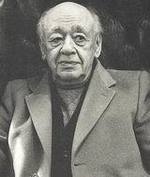
Eugène Ionesco
Eugène Ionesco was born in Slatina, Romania, in 1909 to a Romanian father and a French mother, and he passed away in Paris in 1994. In 1942, he settled permanently in France, where he gained recognition as a playwright. His early works, "The Bald Soprano" (1950), "The Lesson" (1951), "The Chairs" (1953), "Amédée, or How to Get Rid of It" (1954), and "Jack, or The Submission" (1955), mark the emergence of the Theatre of the Absurd. Free from all the tricks of psychology and theatricality, these works are characterized as provocative, critical, and revolutionary. Theatrical codes are violated, Aristotelian logic is overturned, and the communicative power of language is questioned, resulting in ambiguity and multiple interpretations. These plays abound with wordplay, frenetic rhythm, multiplication of objects, and the grotesque, which reveal human weaknesses, deeper instincts, and anxieties. After 1958, Ionesco's works gain clarity and depth as imagination and dreamlike elements are limited. The author becomes more concerned with the tragedy of human existence. Absurdities and the grotesque give way to works like "Exit the King" (1962), "Hunger and Thirst" (1965), and "Killing Game" (1970), where metaphysical concerns and pessimism prevail. Meanwhile, politics, in the broad sense of the term, provides Ionesco with the opportunity to write plays such as "Rhinoceros" (1960), "Macbett" (1972), and "Maximilian Kolbe" (1980), which address themes of resistance to fanaticism, the destructive passion for power, and the necessity of freedom of thought and action as supreme values.