Charlotte Beradt

Charlotte Beradt
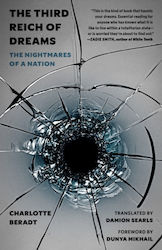
Charlotte Beradt (née Aron) was born on December 7, 1907, in the town of Forst, Brandenburg. She grew up in Berlin as the daughter of a German-Jewish merchant. She began her career in journalism by writing for German newspapers and political reviews. From the early 1930s, she regularly contributed to the political and cultural review Die Weltbühne, which featured the elite of leftist German intellectuals. She was a member of the Communist Party of Germany (KPD) but left due to disagreements with its shift towards Stalinism. After Hitler's rise to power, she was banned from practicing journalism. In 1939, she fled with her husband, German-Jewish lawyer and writer Martin Beradt, to London and then to New York. After the war, she was allowed to write again for the West German press. Following her husband's death, she focused on his literary legacy and, during the same period, became associated with Hannah Arendt, translating five of her political essays into German. Her first book, "Das Dritte Reich des Traums" (Dreams in the Third Reich, which could also be rendered as "The Third Reich of Dreams"), was published in Germany in 1966. She had begun collecting material for it in 1933 while still living in Germany. In 1969, Beradt published a biography of the leftist German-Jewish politician Paul Levi, a founding member and president of the KPD from 1919 to 1921, who later disagreed with the leadership and returned to the SPD. That same year, she edited Levi's writings, and in 1973, the correspondence between Rosa Luxemburg and her secretary and friend Mathilde Jacob. Until her advanced age, she remained an active journalist. She also engaged in translation and theater criticism, and from 1962 to 1978, she curated and presented the radio program Diaries. She passed away in 1986 in New York. Her role in the film "Hannah Arendt" (2012) was portrayed by Austrian actress Victoria Trauttsmansdorf.

0