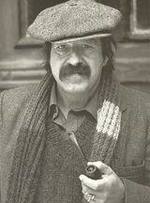
Günter Grass
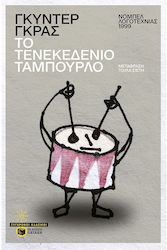
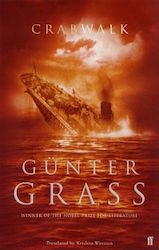
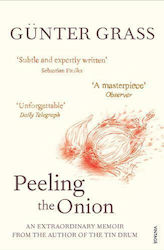
Günter Grass was born in 1927 in the Free City of Danzig, now Gdańsk, Poland, to a German father and a Polish mother. To escape the confines of his "Catholic middle-class family," as he described it, he joined the Reich Labor Service at the age of 15, and two years later, in November 1944, he was conscripted into the notorious Waffen SS, as he confessed in his autobiography. In March 1945, while serving in the 10th SS Panzer Division, Grass was wounded and captured by the Americans. After the war, he worked various jobs, from miner to stonemason. He studied at the Düsseldorf Academy of Fine Arts and the Berlin University of the Arts, where he pursued sculpture and graphic design, and lived for a few years in Paris, engaging with literary circles. In 1956, Grass made his literary debut with a collection of poems. After the war, he became active with "Group 47"—alongside Hans Magnus Enzensberger, Martin Walser, Siegfried Lenz, Ingeborg Bachmann, and others—a group of intellectuals united by the issue of collective consciousness in post-Nazi Germany. He gained worldwide fame with the "Danzig Trilogy": "The Tin Drum" (1959, adapted into a film by Volker Schlöndorff twenty years later), "Cat and Mouse" (1961), "Dog Years" (1963). Other works include "The Flounder" (1979), "The Call of the Toad" (1992), "Too Far Afield" (1995), "My Century" (1999), "Crabwalk" (2002), and, of course, his autobiography "Peeling the Onion" (2006). Throughout his career, he remained intensely political, supporting the Social Democratic Party in the 1960s (serving as an advisor to Willy Brandt), advocating for peace with fiery articles in the press against NATO bombings in Serbia and the American invasion of Iraq, as well as against Slobodan Milošević, among others. In 1999, he was awarded the Nobel Prize in Literature for his body of work. He passed away on April 13, 2015, at the age of 87.
(photo: Isolde Ohlbaum)


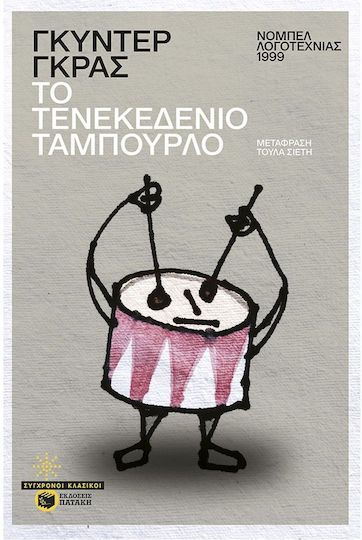 Greek Fiction Books
 Greek Fiction Books
 Greek Fiction Books