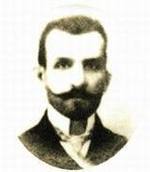
Kostas Paroritis
Kostas Paroritis (1878-1931). Kostas Paroritis, the literary pseudonym of Leonidas Soureas, was born in Parori or Paroreio in the Laconia region, near Sparta. He studied at the Faculty of Philosophy at the University of Athens. After graduating, he worked as a Greek language teacher, initially in Sparta and from 1907 to around 1916 at the School of Hydra. During his time in Hydra, he decisively shaped his linguistic orientation in favor of Psycharis' demoticism and turned towards socialism, crystallized through his correspondence with Konstantinos Chatzopoulos during the same period. From Hydra, he made his first official appearance in literature (following earlier publications in the newspaper Sparta and the Spartan Calendar by M.I. Theodoropoulos in 1903) with the publication of the short story collection "The Dead of Life," whose ideological commitment led to his suspension for a month by the Educational Council in 1908. He published short stories and articles mainly in Noumas, but also in publications like Skokos' National Calendar, New Altars, The Muse, The Torch, the Asia Minor Calendar, Alexandria Letters, and later (after 1920) in newspapers such as Free Speech, Democracy, Free Speech, and Rizospastis. He was also a member of the Artistic Society of the Black Cat café and the Socialist Demotic Union (since 1909). Starting from the realm of ethnographic short stories and the romanticism of Wolfgang Goethe, Kostas Paroritis later moved to the novelistic depiction of the lives of internal migrants and marginal types in Athens, influenced by the French and Russian literary production of socialist realism and operating within the framework of socially committed demotic literature by authors like Demosthenes Voutyras and Konstantinos Theotokis. However, he separated himself from the first Greek socialist writers (Chatzopoulos, Tagopoulos, etc.) as he deviated from the theory of naturalism regarding the dominant role of the environment in human fate and supported the vision of a new social reality, with the necessary condition being the activation of the working and, more generally, the popular classes. For more biographical details on Kostas Paroritis, see Tellos Agras, "Paroritis Kostas," Great Greek Encyclopedia 19. Athens, Pyrsos, 1932; Manolis Gialourakis, "Paroritis Kostas," Great Encyclopedia of Modern Greek Literature 11. Athens, Haris Patsis, n.d.; Alex Ziras, "Paroritis Kostas," World Biographical Dictionary 8. Athens, Ekdotiki Athinon, 1988; and Alexis Ziras, "Kostas Paroritis," Our Older Prose; From its beginnings to the First World War X (1900-1914), pp. 366-391. Athens, Sokolis, 1997. (Source: Archive of Greek Writers, EKEBI).
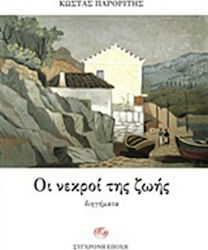
 Greek Fiction Books


Be the first to leave a comment!