Richard P. Feynman
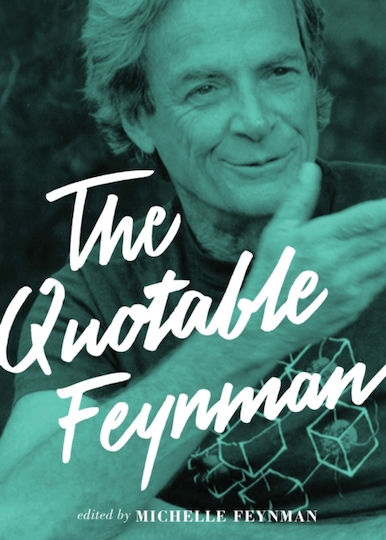
Richard P. Feynman was born in Brooklyn in 1918 and earned his Ph.D. from Princeton University in 1942. Despite his young age, he played a significant role in the Manhattan Project at Los Alamos during World War II. He later taught at Cornell University and the California Institute of Technology. In 1965, he was awarded the Nobel Prize in Physics, along with Sin-Itiro Tomonaga and Julian Schwinger, for his work in quantum electrodynamics. Dr. Feynman received the Nobel Prize for successfully resolving specific problems in the theory of quantum electrodynamics. He also formulated a mathematical theory explaining the phenomenon of superfluidity in liquid helium. Subsequently, together with Murray Gell-Mann, he conducted fundamental research in the field of weak interactions, such as beta decay. In later years, Feynman played a key role in the development of quark theory, introducing the parton model for high-energy proton scattering processes. In addition to these achievements, Dr. Feynman introduced entirely new computational techniques and symbolism in physics, most notably the now-famous Feynman diagrams, which—perhaps more than any other formalism in modern scientific history—changed the way we understand fundamental physical processes and calculate the physical quantities that characterize them. Feynman was an exceptionally skilled teacher. Of all his numerous awards, he was particularly proud of the Oersted Medal for Teaching, which he received in 1972. His book "Lectures on Physics," first published in 1963, was described by a reviewer for "Scientific American" as "a difficult, but fertile and captivating book—twenty-five years later, the book remains the ideal guide for teachers and the best among students taking their first steps in the field of science." Beyond physics, he occasionally engaged in repairing radios, lock picking, painting, dancing, playing percussion instruments, and even deciphering Mayan hieroglyphics. Constantly curious about the world around him, he was an exemplary empiricist. Richard Feynman passed away in Los Angeles on February 15, 1988.


 Biographies & Memoirs
 Biographies & Memoirs
 Essays