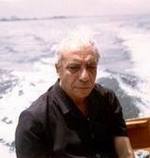
Stratis Tsirkas
STRATIS TSIRKAS (1911-1980)
Stratis Tsirkas (the literary pseudonym of Yiannis Chatzandreou, derived from his father's nickname), son of Kostas and Persephone Chatzandreou, was born and spent his childhood and youth in Cairo. He had three younger siblings. Around 1917, he enrolled in the Ambetios School, in the commercial department, from which he graduated in 1928. After graduation, he worked at the National Bank of Egypt for a year and from 1929 to 1939 in a cotton company in Upper Egypt, initially as an accountant and later as the director of the ginning mills. In 1933, his father died of tuberculosis. In 1935, he joined the anti-fascist organization "Ligue Pacifiste" and co-founded the "Anti-Fascist Vanguard" with Theodosis Pierides. In 1937, he married Antigoni Kerassoti, with whom he traveled to Austria, Italy, Yugoslavia, France, and Greece, and they had a son, Kostas (born 1957). In the summer of the same year, he participated (alongside Bertolt Brecht, Louis Aragon, Pablo Neruda, and others) in the Second International Congress of Writers for the Defense of Culture against War and Fascism in Paris, and co-wrote with Hughes the oath to Lorca, which was promoted by Louis Aragon and signed by forty writers. From 1939 to 1963, he lived in Alexandria and worked as a tannery director (he left for a few months in 1942 when Rommel threatened the city). In 1943, he became a leading member of the Greek Liberation League. During this period, he met Giorgos Seferis. In 1961, he was expelled from the Communist Party of Greece (KKE) for refusing to renounce his work "The Club," which had been published shortly before. In 1963, he moved to Athens, where he lived until his death. After the declaration of Papadopoulos's dictatorship, he became a member of the Patriotic Anti-Dictatorship Front. In 1969, he joined the KKE Interior and a year later participated in the compilation of the anti-dictatorial volume "18 Texts" with the short story "Allaxokairia." He also contributed to the volume "New Texts" (1970) and "New Texts 2." He died at the Hippocrates Hospital at the age of 69 from an aneurysm. He collaborated with magazines such as "Ellin" (later the organ of EAS), "Cypriot Letters," "Free Letters," "Alexandrian Literature," "Paroikos," "Voice," "Art Review," "Avgi," "Tachydromos," and "Synexeia." He was awarded the State Biography Prize for his work "Cavafy and His Era" (1959) and the French Critics and Publishers Prize for "Drifting Cities" (1972). Stratis Tsirkas is positioned between the interwar and postwar generations of modern Greek prose, and his work is closely linked to the political developments in Greece and his birthplace, in which he actively participated. His first appearance in the literary field was in 1927 with translations of Musset, Heine, and Schiller in the magazines "Bouquet" and "Family," and the publication of his first short story titled "The Moon" in the magazine "Panegyptia." In 1930, he published the short story "Noon" in the magazine "Pioneering" and his first poem, titled "Pot pourri," in the magazine "Alexandrian Art." In the same year, he met K.P. Cavafy. In 1937, he released the poetry collection "Fellahs," where he signed for the first time with the name Stratis Tsirkas. Until the outbreak of the Second World War, he was involved in poetry and short stories. He became well-known primarily after the publication of the biography "Cavafy and His Era" and the novel trilogy "Drifting Cities," which divided critics and literary circles and sparked discussions within the leftist intellectual community. His works have been translated into many foreign languages. For more biographical details on Stratis Tsirkas, see Chrysa Prokopaki, "In the Footsteps of Stratis Tsirkas: A Chronological Sketch," Athens, Kedros, 1985; Heraklis Papalexis, "Chronology of Stratis Tsirkas (1911-1980)," Diavazo vol. 171, 15/7/1987, pp. 10-16; Alexis Ziras, "Tsirkas Stratis," in "World Biographical Dictionary," vol. 9b, Athens, Ekdotiki Athinon, 1988; and Alexandros Argyriou, "Stratis Tsirkas," in "Post-War Prose: From the War of '40 to the Dictatorship of 1967," vol. Z, pp. 290-377, Athens, Sokolis, 1988.
(Source: Archive of Greek Authors, E.KE.VI.).

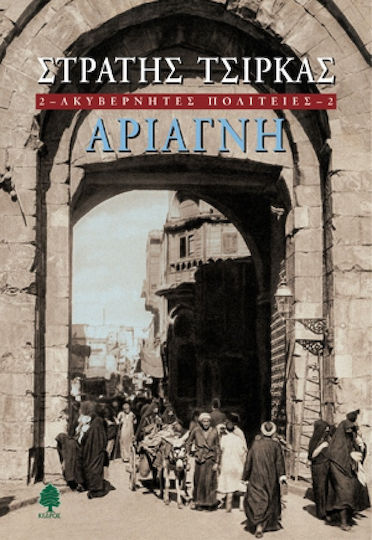 Greek Fiction Books
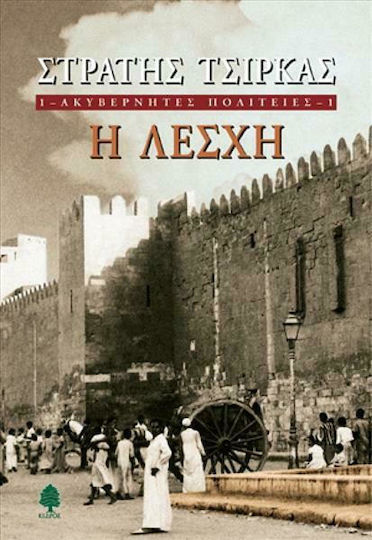 Greek Fiction Books
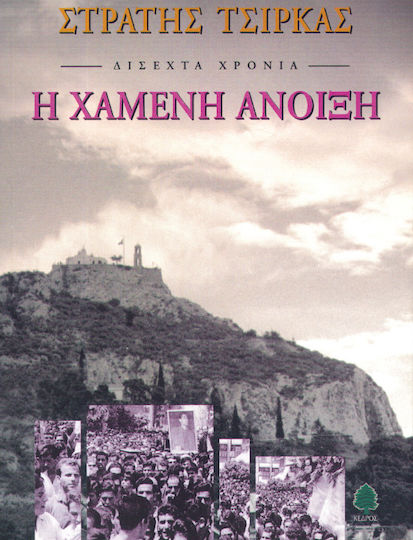 Greek Fiction Books
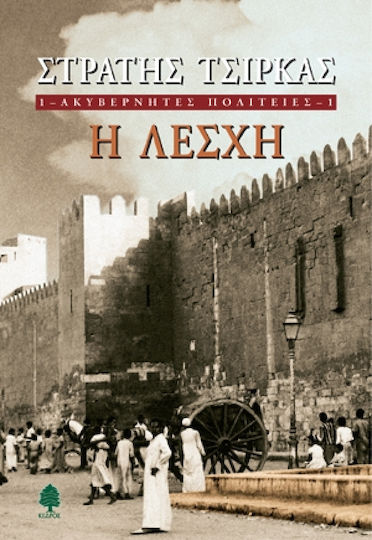 Greek Fiction Books
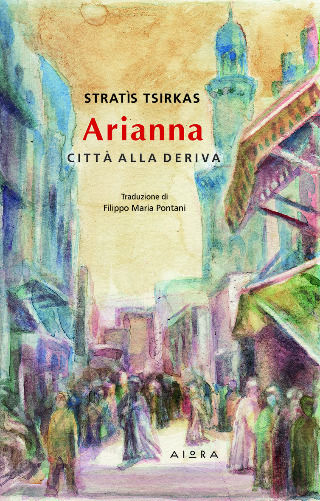
 Greek Fiction Books