Takis Sinopoulos
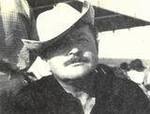
Takis Sinopoulos
Takis Sinopoulos (1917-1981). Takis Sinopoulos was born in Agoulinitsa, Ilia, as the firstborn son of philologist George Sinopoulos and Rousa-Veneta, née Argyropoulou, and was baptized Paikos. In 1920, the Sinopoulos family moved to Pyrgos, Ilia. There, the poet's brother, Noulis (Athanasios), and the twins Pavlos and Maria were born. Sinopoulos spent his school years in Pyrgos and, in 1934, moved to Athens to study medicine. During his studies, he published poems, prose, critical notes, and translations in literary magazines in Athens and the provinces. In 1941, he was drafted as a medical sergeant. During the German occupation, he participated in amateur theatrical performances, continued writing and publishing translations and poems, was imprisoned by the Italians as a resistance fighter (1942), and graduated from the Medical School (1944). During the Civil War, he served as an infantry doctor and stayed for two years (1946-1947) with his battalion in a village outside Kalambaka. He returned to Athens in 1948 and practiced medicine for many years from 1949. He died in Pyrgos, Ilia. His first appearance in the literary field was in 1934 with the publication of the poem "Betrayal" and the short story "The Revenge of a Humble Man" in the Pyrgos newspaper "New Day" under the pseudonym Argyros Roubanis, while his first poetry collection was titled "Metaxmio" and was published in 1951. The literary criticism divides Takis Sinopoulos's poetic journey into two phases. In the first (1940-1965), descriptive and lyrical elements dominate, along with contemplative writing and influences from Eliot, Seferis, and Ezra Pound, within the effort to define the poetic universe in an anti-poetic and disappointing world. The second phase (around 1965 until the end of his poetic production) moves within the same thematic frameworks of decay and death but shows a shift in the use of linguistic material towards an anti-poetic, aggressive, and often ironic discourse. From 1963 to 1967, he collaborated with the magazine "Epoches," where he published book reviews. During Papadopoulos's dictatorship, he participated in the anti-dictatorial publications "18 Texts" and "Texts" 1 and 2, was a co-founder of the Society for the Study of Greek Problems, and a collaborator of the magazine "Synexeia." For more biographical details, see Alexandros Argyriou, "Takis Sinopoulos," in "Greek Poetry: The First Post-War Generation," Athens: Sokolis, 1982, pp. 134-157, Alexis Ziras, "Sinopoulos Takis," in "World Biographical Dictionary," vol. 9a, Athens: Ekdotiki Athinon, 1988, and Michalis G. Meraklis, "Sinopoulos, Takis," in "Dictionary of Modern Greek Literature," Athens: Patakis, 2007, pp. 2017-2018. (Source: Archive of Greek Authors, EKEBI).
-
Greek Fiction Books
-

All categories

Categories
 Greek Fiction Books
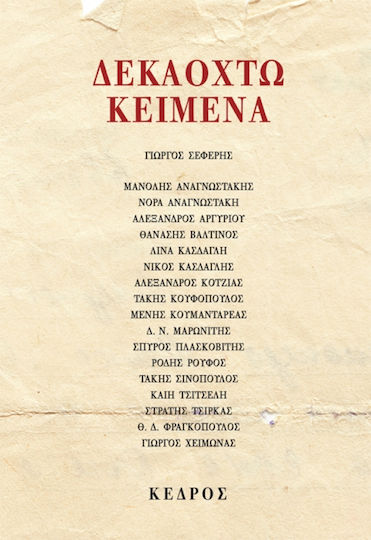
Δεκαοχτω Κειμενα
THanasis Valtinos, Dimitris N. Maronitis et al., 2016 , Cedar
from9,94 € at 2 stores0