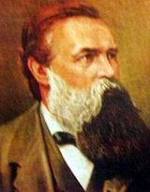
Friedrich Engels
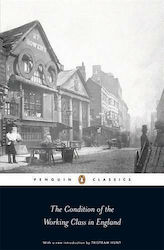
Friedrich Engels was born in 1820, the son of a successful German industrialist. At the age of 24, his father sent him to Manchester, England, to work in a cotton mill. The young Friedrich was shocked by the city's poverty and began writing a report that was published as "The Condition of the Working Class in England" (1844). Shortly thereafter, in France, Engels met Marx, and they formed a close friendship. He shared Marx's views on capitalism and had a particular talent for writing speeches intended for the general public. Engels later followed Marx to Belgium after the Prussian authorities pressured France to exile the latter. At the time, Belgium was a country with more freedom of expression compared to other European states. In 1846, they created the "Communist Correspondence Committee" to unite socialist leaders living in various parts of Europe. Influenced by this intense activity, socialists in England decided to form a new organization, the "Communist League." The purpose of this organization was "the overthrow of the bourgeoisie, the dominance of the proletariat, the abolition of the old capitalist society based on class antagonisms, and the establishment of a new classless society where there would be no private property." Engels later returned to Germany for economic reasons and worked in his father's business, thus securing income for Karl Marx as well. The two friends maintained close contact for the next twelve years, communicating by mail on average with a letter every two days. After Marx's death in March 1883, Engels dedicated his life to publishing and translating Marx's works until his own death in 1895. As a natural consequence of the radical positions he advocated, Engels' ideas have sparked debates and equally radical disagreements that continue to this day. Nevertheless, his contribution to the renewal and creation of modern philosophical ideas is evident and should be taken seriously.
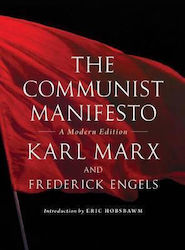

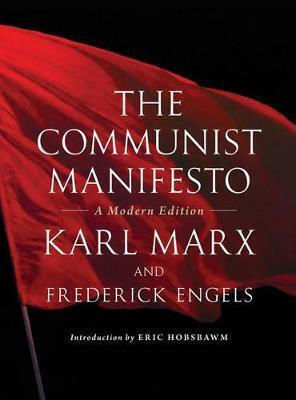
 Political Books
 Scientific Books