Nazim Hikmet
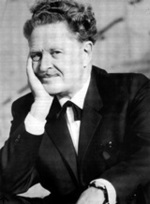
Nazim Hikmet (1902-1963), born in Thessaloniki during the Ottoman Empire and whose works have been set to music by Mikis Theodorakis, Manos Loizos, Thanos Mikroutsikos, and others, is one of the great foreign poets who holds a special place for Greek readers. Coming from a family of state officials, Hikmet initially attended the naval academy and supported the Kemalist revolution, while simultaneously writing patriotic poems in verse. However, his communist ideas quickly put him at odds with the new order in Turkey. Wanting to experience the results of the Bolshevik revolution firsthand, he moved to Moscow, where he studied economics and political science. He returned to Turkey in 1924, introducing free verse and the so-called "de-poeticization of poetry," and systematically promoted his political views through his multifaceted literary work. As a result, he was considered a dissident and spent many years of his life in prison. In 1951, he permanently left Turkey, spending his final years in the USSR and other Eastern European countries, where he served his communist ideals. In his homeland, he became popular mainly after his death. For the Turkish left, he was "the people's poet and a hero of the revolution." Internationally, he is considered one of the most important poets of the 20th century, and his work has been translated into 50 languages.