Nikolaos Kalas
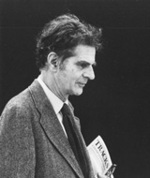
Nikolaos Kalas
Nicolas Calas (1907-1988), also known by the pseudonyms Nikitas Randos and M. Spieros, was born in Lausanne. As an infant, he moved with his family to Athens, where he lived until 1934 and studied at the Law School of the University of Athens. During his studies, he was a member of the Student Society, where he met Giorgos Theotokas, Ilias Tsirimokos, and other members of the "Educational Group," following in the footsteps of Dimitris Glinos. He later divided his life between Athens and Paris (from 1937, he lived permanently in the French capital for two years) and spent a year in Lisbon from 1939. In Paris, he came into contact with the avant-garde artistic movements of the time, particularly surrealism. In 1942, he settled in New York. During World War II, he volunteered at the Office of War Information and became a U.S. citizen in 1945. He worked at Columbia University as a collaborator in the "Research in Contemporary Cultures" program and at Fairleigh Dickinson University in New Jersey, where he held the position of Associate Professor of Art. He briefly returned to Greece in the 1960s, collaborating with the magazine "Pali," left, and returned after the political changeover of 1974. During this second visit, he gave lectures and collaborated with the magazines "Xnari" and "Socialism or Barbarism," with which his friend Michalis Raptis (Pablo) was associated. Shortly thereafter, he returned to the U.S., where he remained until his death. He first appeared in literature in 1929 with articles published in the magazines "Student Society," "Noumas," and "Discipline." In 1932, he published his first poetry collection titled "Poems." His poetry pamphlets "Poetic Notebooks," published in 1936, are indicative of his influences from German expressionism, Russian futurism, and surrealism. Along with Takis Papatsonis, Calas was the first to translate T.S. Eliot into Greek. Calas's theoretical exploration began in the realm of orthodox Marxism and gradually led to a more eclectic view of socialism, influenced by Freud's psychoanalysis. A representative work of his thought is the essay "Foyers d’incendie," published in Paris in 1938. Here, he first used the name Nicolas Calas, under which he collaborated with publications such as "View," "Possibilities," "Tiger’s Eye," "Art News," "Art International," "Arts Magazine," "Art in America," "Art Forum," "XX Siecle," "Colloquio," and others. He was awarded the First State Prize for Poetry in 1977 for the collection "Odos Nikita Randou." For more biographical details on Nicolas Calas, see Argyriou Alex., "Randos Nikitas," World Biographical Dictionary 9a. Athens, Ekdotiki Athinon, 1988, Argyriou, Alexandros, "Successive Readings of Greek Surrealists." Athens, Gnosis, 1983, and Sarris, Kyrillos "Prologue for Nicolas Calas" in the volume "Art in the Age of Risk and Other Essays by Nicolas Calas"; translated by Andreas Pappas. Athens, Agra, 1997. (Source: Archive of Greek Authors, EKEBI).
-
Greek Fiction Books
-

All categories

Categories
0