
Romain Gary
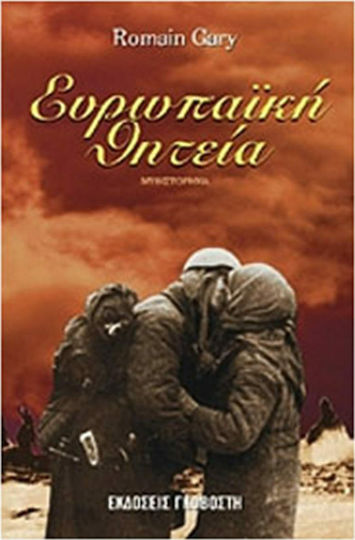
Romain Gary, the pseudonym of Romain Kacew, was born in Vilna, Russia (present-day Vilnius, Lithuania) in 1914. He was raised by his mother, who instilled in him great hopes for life, which he recounts in the book "Promise at Dawn." Poor, "Cossack, a little Tatar mixed with Jewish," he arrived in France at the age of fourteen and settled with his mother in Nice. After completing his law studies, he served in the air force. In 1940, he met General de Gaulle. His first novel, "European Education," was successfully published in 1945, establishing him as a great writer-narrator with a strict and poetic style. In the same year, he was appointed to the French Ministry of Foreign Affairs. His profession took him to Sofia, La Paz, New York, and Los Angeles. In 1948, he published "The Company of Men," and in 1956, he was awarded the Goncourt Prize for "The Roots of Heaven." While serving as consul in Los Angeles, he married actress Jean Seberg, wrote screenplays, and directed two films. He left diplomacy in 1961 and wrote "Birds Come to Die in Peru (Glory to Our Illustrious Pioneers)" and a humorous novel, "Lady L.," before releasing the short story collections "The American Comedy" and "Brother Ocean." His novels "Beyond This Point Your Ticket Is No Longer Valid," "Clair de femme," and "The Kites" reflect his anxiety about decline and old age. His wife committed suicide in 1970; he took his own life in 1980, leaving a letter revealing that he was the man behind the name Emile Ajar, the author of successful novels such as "Gros Câlin," "The Anxiety of King Solomon," and "The Life Before Us," for which he received the Goncourt Prize in 1975.


 Greek Fiction Books
 Greek Fiction Books
 Greek Fiction Books