Tatiana Stayrou
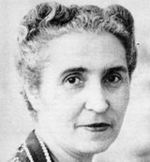
Tatiana Stayrou
Tatiana Stavrou (1899-1990). Tatiana Stavrou (surname adopted from her marriage to Dimitris Stavrou in 1929, née Adamantiadou) was born in Vafeochorio, Constantinople, the daughter of philologist and high school principal Ioannis Adamantiadis and his wife Smaragda. She had five siblings. Two years after the Asia Minor Catastrophe and following the death of her father, the Adamantiadis family sought refuge and settled in Athens. During the German occupation, Stavrou joined the National Liberation Front (EAM) and the Welfare Service for the Armed Forces. She traveled to France and Italy, collaborated with the National Radio Foundation (1956-1957), and was a founding member and president of the Women's Literary Society (1958). She was also a member of the National Society of Greek Writers, the Women's Association of Letters and Arts, and the Greek P.E.N. Club. She passed away in Athens. Tatiana Stavrou belongs to the literary generation of the interwar period. From a young age, she showed an interest in literature, encouraged by her family environment. During her youth in the City, she came into contact with the demoticist circles and the magazines "Logos" (by Homer Bekes and Giannis Chalkousis) and "Zoi" (by Apostolos Melachrinos). Her literary debut was in 1932 with the publication of a short story in Apostolos Melachrinos' magazine "O Kyklos." This was followed by the publication of her short story collection "Those Who Remained," which established Stavrou in the literary scene of the so-called '30s generation, particularly among those creators who focused thematically on the historical adventures of Hellenism from the war of 1897 to the Asia Minor Catastrophe. Throughout her work, Stavrou remained faithful to the tenets of psychographic realism with experiential foundations and the themes she inaugurated with her first work, expanding them with subsequent works to the historical periods of the Greco-Italian War, the occupation, and the civil war. Her writing is characterized by an emphasis on describing the personal tragedies of her characters and an interesting approach to and portrayal of female psychology. She collaborated with magazines such as "Rythmos," "Nea Epitheorisi," "Neoellinika Grammata," "Oikogeneiaki Zoi," "Nea Estia," "Kainouria Epohi," "Aiolika Grammata," and others, where she published poems, literary translations, as well as articles and studies on Greek tradition. She was honored with the commendation of the Academy of Athens (1935 for the short story collection "Those Who Remained"), the State Novel Award (1942 for "Secret Sources"), the Academy of Athens Award (1967 for the study "The Greek Philological Association in Constantinople"), the Estia Nea Smyrni Award (1968 for the study "The Greek Philological Association in Constantinople"), the second State Prose Award (1974 for "The City Has Fallen"), and the Constantinopolitans' Association Award (1982 for her entire body of work). Her works have been translated into German and Russian. For more biographical details on Tatiana Stavrou, see Ziras Alex., "Stavrou Tatiana," World Biographical Dictionary 9a. Athens, Ekdotiki Athinon, 1988; Malevitsis Christos, "Tatiana Stavrou," Nea Estia 128, year 64, 15/10/1990, no. 1519, pp. 1415-1416; Boukouvala-Anagnostou Ioanna, "Stavrou Tatiana," Great Encyclopedia of Modern Greek Literature 12. Athens, Haris Patsis, n.d. Stavropoulou Eri, "Tatiana Stavrou," Interwar Prose: From the First to the Second World War (1914-1939) VIII, pp. 98-120. Athens, Sokolis, 1993. (Source: Archive of Greek Authors, EKEBI).
 Greek Fiction Books
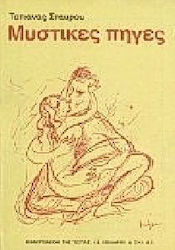
Μυστικές Πηγές, Erotic Novel
Tatiana Stayrou, 1975 , Cover: Hard , Estia Bookstore
0
0
 Greek Fiction Books
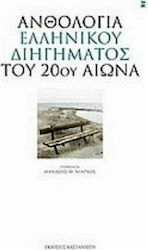
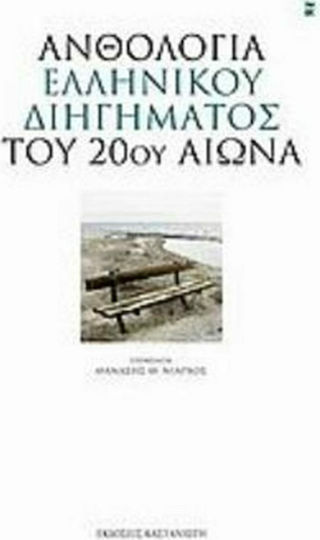
Ανθολογία Ελληνικού Διηγήματος του 20ού Αιώνα
Collective Work, 2009 , Cover: Hard , Kastaniotis Editions
from24,86 € at 5 stores0