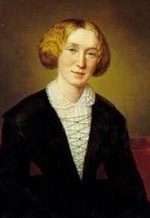
George Eliot
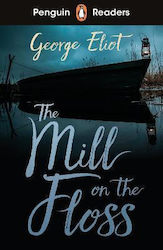
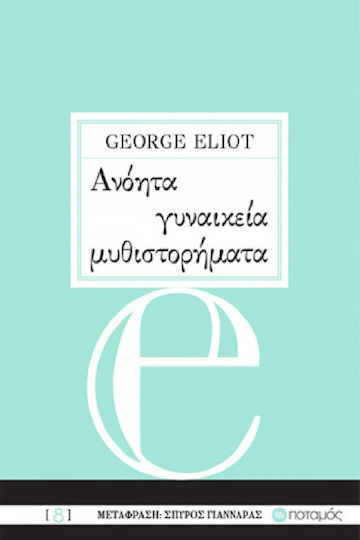
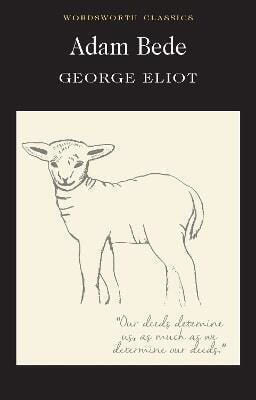
The English novelist George Eliot is considered one of the great figures of English literature. Her real name was Mary Anne Evans. She was born in Warwickshire, England, in 1819. A deeply religious child, she taught Sunday school from the age of twelve. As a student, she came under the influence of various evangelists, including Reverend John Edmund Jones, a preacher who later appeared in some of her novels. However, later on, when she moved to Coventry in 1841, she met Charles and Caroline Bray, who were free-thinking religious individuals. Their influence led her to reconsider many of her evangelical views, but religion continued to play a significant role in her life and work. Through the Brays, she undertook the translation of Strauss's "The Life of Jesus" and met publisher John Chapman, who hired her as a journalist for the Westminster Review in 1851. In 1856, she published an article there titled "Silly Novels by Lady Novelists," where she criticized the female authors of the time for the melodrama, bombastic style, and excesses in their works, as well as their ignorance of life beyond the limited confines of their social circles. Ten days later, she picked up her pen and began writing her first work, "The Sad Fortunes of the Reverend Amos Barton," which she published under the male pseudonym George Eliot. Her subsequent works, including "Adam Bede," "The Mill on the Floss," "Silas Marner," and "Middlemarch"—considered by many to be her masterpiece—established her as one of the greatest writers of her time. She often used ecclesiastical and social themes and perfected the art of character analysis, paving the way for the "modern" novel. Around the time she began working as a journalist, she settled in London, where she formed a close friendship with Herbert Spencer and later with writer George Henry Lewes, with whom she lived without marrying, as Lewes had not divorced his wife. After Lewes's death in 1878, Eliot married forty-year-old John Walter Cross in 1880, but she died shortly thereafter and was buried next to Lewes in 1882.


 Greek Fiction Books