Ioannis N. Gryparis
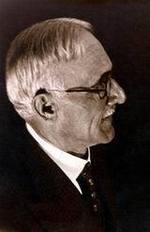
Ioannis N. Gryparis
Ioannis Gryparis (1872-1942). Ioannis Gryparis was born in Sifnos, where his family originated, but he spent his childhood and school years in Constantinople. His father was a teacher and bookseller. He graduated from the Great School of the Nation and in 1888 enrolled at the University of Athens to study philology. In 1892, his collection "Deilina," written in the demotic language, was rejected by the committee of the Philadelphian competition. That same year, he returned to the City for five years, where he worked as a Greek teacher and co-edited (along with Alexandra Papadopoulou) the literary magazine "Philologiki Echo" by Nikos Falireas. During his two-year collaboration with "Philologiki Echo" (1896-1897), Gryparis succeeded in securing contributions from notable figures such as Palamas, Psycharis, Eftaliotis, and others, transforming the once obscure magazine into a platform for the demoticists. He was also a co-founder (along with Kostas Chatzopoulos and Giannis Kampysis) of the significant literary magazine "I Techni" (1898), which was pioneering in providing international updates on literary movements and greatly influenced the renewal of the Greek intellectual and artistic landscape of the time. In 1897, following the massacre of Armenians by the Turkish authorities, Gryparis sought refuge in Athens, where he eventually obtained his degree in philology. From 1897 to 1911, he worked as a secondary education teacher on Aegean islands, in Amfissa, and Aigio. In 1911, he married and left with a scholarship to Europe (Italy, Germany, France) until 1914. He served as a school principal in Gytheio and Messolonghi (1914-1917), a general inspector of secondary education in Chalkida (1917-1920), head of the Letters and Arts Department at the Ministry of Education (from 1923), editor of the magazine "Illustrated Greece" (1925), and director of the National Theatre (1930-1936). Concurrently, Gryparis developed a literary career in both poetry and prose. His sole poetic work is the demotic collection "Scarabs and Terracottas" (1919), which gathered poems he had previously published (1893-1909) in literary magazines and newspapers, and for which he was awarded the Prize of Letters and Arts. Gryparis's poems show influences from the currents of French symbolism and Parnassianism. His prose work consists of chronicles, critical notes, articles, and primarily translations (all surviving works of Sophocles and Aeschylus, Euripides' "The Bacchae," excerpts from Plato, Homer, Bacchylides, Pindar, Herodotus, Catullus, Horace, as well as works by Goethe, Schiller, Heine, Zola, Hamsun, Shelley, and others). Special mention should be made of his translations of ancient tragedies, which formed the basis for the revival of ancient Greek drama within the framework of the Delphic Festivals organized by Angelos Sikelianos and subsequently by the National Theatre. For more biographical details on Ioannis Gryparis, see Valetas G., "Gryparis Ioannis," Great Encyclopedia of Modern Greek Literature 6. Athens, Haris Patsis, n.d., K.I.B., "Gryparis Ioannis," Great Greek Encyclopedia 8. Athens, Pyrsos, 1929, Lykourgos Niki, "Gryparis Ioannis," World Biographical Dictionary 3. Athens, Ekdotiki Athinon, 1985, and Meraklis M.G., "Ioannis Gryparis," Greek Poetry; Romantics - Palamas Era - Post-Palamas; Anthology - Literary History, pp. 338-341. Athens, Sokolis, 1977. (Source: Archive of Greek Authors, National Book Centre of Greece).
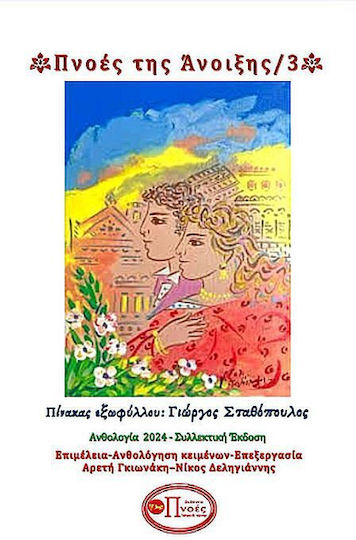 Greek Fiction Books
Πνοές της Άνοιξης / 3
Dionysios Solomos, Giorgos Deligiannis et al., 2024 , Pnoes Logou kai Technis Publications
0