Bernard Malamud
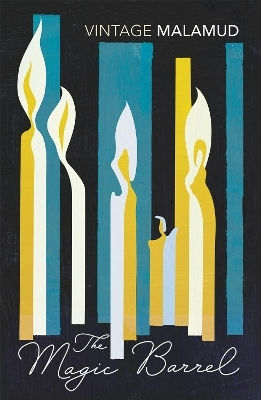
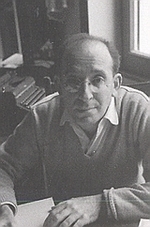
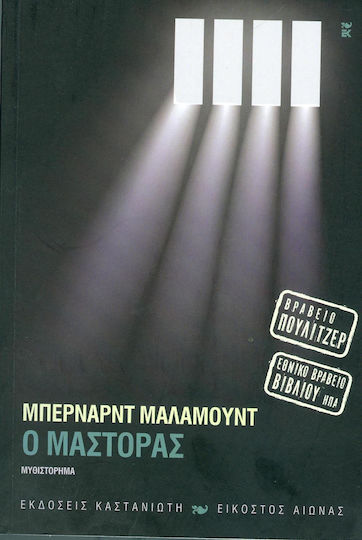
Bernard Malamud (1914-1986) was born in New York City. His parents were Russian Jewish immigrants who ran a small grocery store in Brooklyn. Bernard attended various public schools and graduated from City College of New York in 1936. He worked as a trainee teacher and, in 1942, having not been drafted due to being the family breadwinner, he earned a Master's degree from Columbia University. In the following years, he taught in night schools for adult students. In 1945, he married Ann de Chiara, of Italian descent, despite objections from both families. Ann, a Cornell graduate herself, accompanied him until his death and was always the first to read (and type) his manuscripts. They had a son and a daughter. In 1949, Malamud began teaching composition to freshmen at Oregon State University, but without a doctorate, he was not allowed to teach literature. Although he had started writing and publishing short stories in magazines as early as 1943, it was during his years in Oregon that he developed the habit of dedicating three days a week to writing. In 1961, he left Oregon to teach creative writing at Bennington College in Vermont, a position he held until the end of his life. Malamud completed his first novel in 1948, but it remained unpublished as he later burned the manuscripts. His first published book, a novel about a baseball star, was released in 1952 under the title "The Natural" and initially went unnoticed. However, many years later, it was adapted into a film by Barry Levinson, starring Robert Redford (1984). In his second novel, "The Assistant" (1957), Malamud drew from his childhood experiences to depict a Jewish shopkeeper in Brooklyn. In 1958, his first collection of short stories, "The Magic Barrel," was published and won the National Book Award. This was followed by the novels "A New Life" (1961), inspired by his years at Oregon State University, and "The Fixer" (1966), which earned him both the National Book Award and the Pulitzer Prize. The book, which addresses anti-Semitism in Tsarist Russia, was also adapted into a film (1968) by John Frankenheimer, starring Alan Bates and Dirk Bogarde. Among his other works are the short story collection "Pictures of Fidelman" (1969) and the novels "The Tenants" (1971), "Dubin's Lives" (1979), and "God's Grace" (1982). With his novel "The Fixer," he received the National Book Award for the second time in the same category, as well as the Pulitzer Prize in 1967. Malamud's thematic range is quite broad, his moral sensitivity particularly refined, and his satirical approach often resorts to inventive solutions. Although he considered himself primarily influenced by Mark Twain and Nathaniel Hawthorne, the Jewish and Yiddish aspects of his work are very pronounced. His characters, ordinary people whom he describes with tenderness and compassion, are trapped in a bleak life. Regardless of the setting of their stories—be it the world of baseball, the Brooklyn ghetto, Tsarist Russia, the American West, or a condemned building in New York—they dream of a new beginning, always prioritizing morality and ultimately overcoming their own egos. Bernard Malamud passed away in New York in 1986. His body of work is considered relatively small in scope: he enjoyed writing slowly and carefully, resulting in only seven novels and 54 short stories. Yet, this was enough to rank him among the top Jewish American authors, alongside Saul Bellow and Philip Roth. His entire body of work has been included in the Library of America. He died in 1986.
 Greek Fiction Books
 Greek Fiction Books