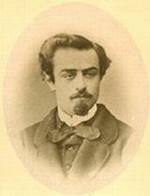
Michail Mitsakis
Michail Mitsakis (1868 or 1863-1916). Information about the life of Michail Mitsakis is drawn from the Encyclopedic Dictionary of Bart and Hirst and from references by his contemporaries. His birth year is often cited as 1868, but due to conflicting information about his life, it is sometimes replaced by 1863. He was born in Megara, the son of Aristeidis and Marigo Mitsakis, but his family originated from Sparta, where he received his early education and completed high school. As a student, he published the short-lived newspaper "Taygetos." In 1880, he enrolled in the Law School of the University of Athens but soon abandoned his studies to pursue journalism, initially collaborating with the magazine "Asmodaios." He went on to publish various articles in most Athenian newspapers and many magazines, sometimes signing with his name (mainly for literary texts) or his initials, and at other times using pseudonyms (Krak and Kothornos). He is also reported to have written anonymous articles. He published the humorous periodicals "Thorivos" and "Protevousa," which circulated for a short time. He was a co-founder of the satirical "Asteos" along with Themos and Babis Anninos and served as the director of the "Greek Calendar" by P.D. Sakellariou. His brilliant journalistic career was abruptly interrupted in 1896 due to the peak of his mental illness, which had begun two years earlier. From then on, he remained mentally ill, eventually reaching insanity. From 1914 until his death, he lived in the Dromokaiteio Asylum, where he died of pneumonia. Mitsakis's journalistic work is closely related to his literary output, which was part of his journalistic activities. He published narratives, critical essays, epigrams, and poems in Greek and French. Most of his work was published posthumously. In the context of the language question, he theoretically supported the demotic language but used simple katharevousa, mainly due to his professional career in the press, where demotic was excluded. His linguistic views are thoroughly expressed in his letter "The So-called Demotic Language" (1888), his critical article on Gerasimos Markoras (1890), and his article "The Language Issue in Greece: A Literary Page in Two Languages" (1892), written twice, once in katharevousa ("The Sorrow of Marble") and once in demotic ("The Complaint of Marble"). His prose is written in a mixed language (narration in simple katharevousa, dialogues in demotic). He was influenced by the movements of realism (and later naturalism) and aestheticism, as he was well-informed about contemporary French literature. A dominant theme in his work is internal migration, which was prevalent in Greece at the time, and urban life in Athens. In his effort to depict alienation and estrangement as consequences of city life, Mitsakis subjected his material to the logic of disorganization. The structure of his works is often loose or even absent. Notable works include his first short story titled "The Baptism," the collection of narratives with individual titles "Athenian Pages," "Images and Scenes," "Travel Impressions," the narrative "An Athenian Gold Digger," published independently in 1890, and the short story "Suicide." For more biographical details on Michail Mitsakis, see Th. Vellianitis, "Mitsakis Michail," in "Great Greek Encyclopedia," vol. 17, Athens, Pyrsos, 1931; Ch.D. Gounelas, "Mitsakis Michail," in "World Biographical Dictionary," vol. 6, Athens, Ekdotiki Athinon, 1987; Michalis Peranthis, "Mitsakis Michail," in "Great Encyclopedia of Modern Greek Literature," vol. 10, Athens, Chari Patsi, n.d.; Georgia Gotsi, "Michail Mitsakis," in "Our Older Prose; from its beginnings to the First World War," vol. VI (1880-1900), Athens, Sokolis, 1997; Michalis G. Meraklis, Lamprini Kouzeli, "Mitsakis Michail," in "Dictionary of Modern Greek Literature," Athens, Patakis Publishers, 2007; as well as a tribute to Michail Mitsakis in the book review "The Athens Review of Books," issue 82, March 2017 (with a detailed timeline of the author).
(Source: Archive of Greek Authors, EKEBI).




 Greek Fiction Books

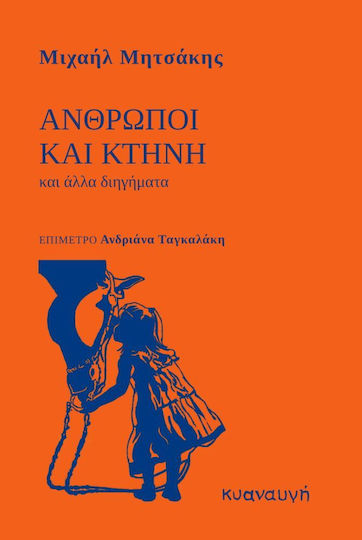
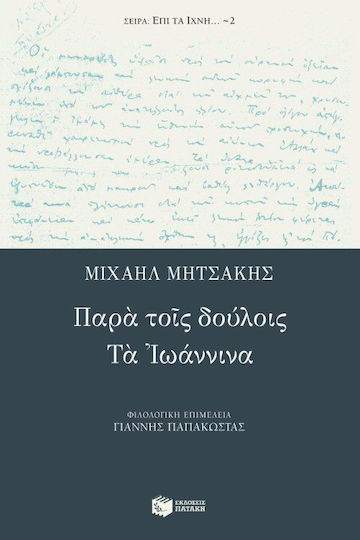 Greek Fiction Books