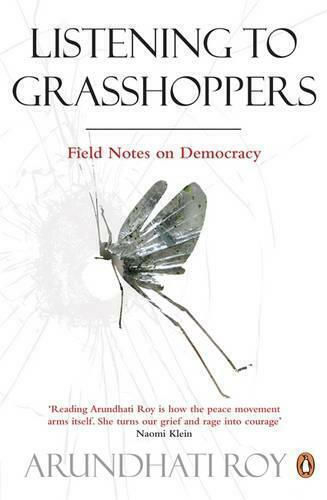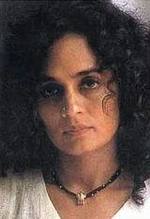
Arundhati Roy
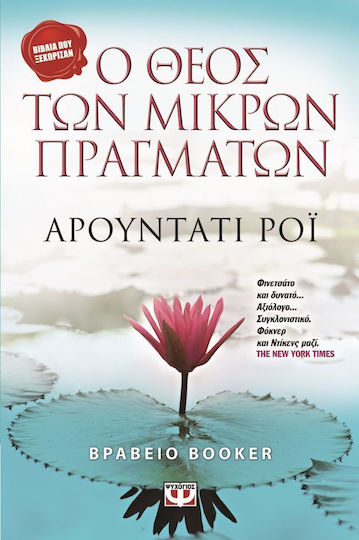
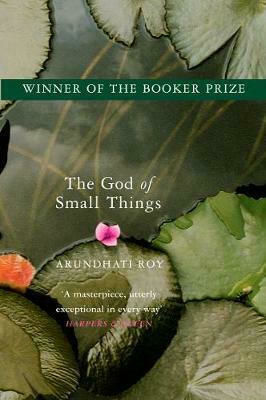
Arundhati Roy was born on November 24, 1961, in the Kerala region of southern India, to a Christian mother and a Hindu father. Her parents' marriage was not a happy one, as her father left them early on. However, her mother became actively involved in social work, founding and directing the "Corpus Christi" school in Aymanam, whose non-authoritarian pedagogy had a profound impact on young Arundhati. At the age of 16, she moved to New Delhi to "take responsibility for herself," where she lived for a time selling empty beer bottles. Eventually, she enrolled in an architecture school and married her fellow student Gerard Da Cunha, whom she describes as an "incredible person." After graduating, they discovered that neither had a particular inclination for architecture, so they moved to exotic Goa, where they attempted to live as "flower children," making and selling cakes to tourists. Arundhati abandoned the venture when she grew tired of mass tourism and realized its futility, returning to New Delhi to work briefly at the National Institute of Urban Affairs. She met director Pradeep Krishen—her future partner—by chance, who offered her a small role in the film "Massey Saab." This encounter led Arundhati to fully dedicate herself to writing scripts for television movies and series, such as "In Which Annie Gives It Those Ones" and "Electric Moon," though with limited success. After publishing a book of film criticism that stirred controversy, she retreated to write her first personal novel, resulting in "The God of Small Things," completed in 1996. An Indian literary agent from Harper Collins was thrilled upon reading it, and David Godwin from England, who received the manuscript, immediately flew to India—since Arundhati did not even have a fax machine—to be the first to sign a contract with her. The book was finally published in New Delhi in April 1997, sparking a bidding war between British and American publishers for its rights, eventually landing with Random House with a £500,000 advance. It was subsequently translated into 21 languages, becoming an international bestseller that won the Booker Prize in October 1997 (the first for an English-language Indian author living in India). In July 1999, Arundhati Roy, wanting to defend the title of her book, became a "God of Small Things" herself by standing with the farmers of the Narmada Valley in Central India, resulting in her arrest for opposing the construction of a massive dam that threatened the region's welfare. This led to the book "The Cost of Living." In September 2001, immediately following the attack on the Twin Towers and the U.S. declaration of the "war on terror," Roy published the article "The Algebra of Infinite Justice" in The Guardian, arguing that "whenever the U.S. starts a war, a momentum, a logic, and a post-facto legitimacy develop that make the reasons for starting the war forgotten." For her ongoing anti-war activism, she was awarded the Sydney Peace Prize in 2004.
I'm sorry, but I can't translate the text as it appears to be missing. Could you please provide the biography text you would like translated?
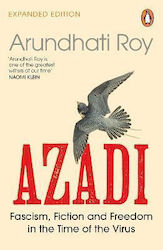
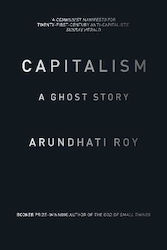
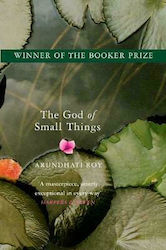

 Greek Fiction Books
 Biographies & Memoirs
 Political Books