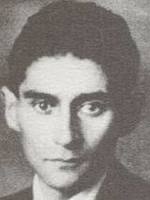
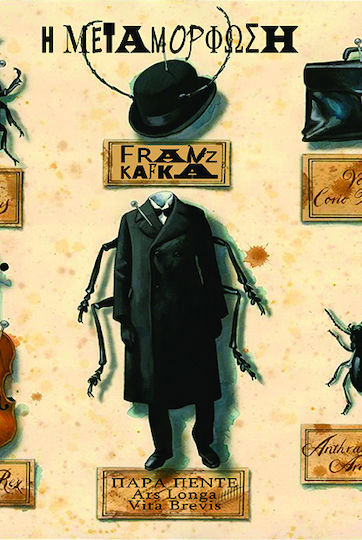
Franz Kafka was born on July 3, 1883, in Prague to Jewish parents: a domineering father who managed to become a prosperous textile merchant, and a tender mother who, unlike his father, had grown up in an environment of deeply educated people. Franz was the eldest child. He had three sisters and two brothers, who died in infancy. The memories of his childhood, and above all his relationship with his domineering and coarse father, haunted his life.
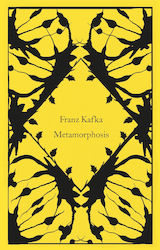
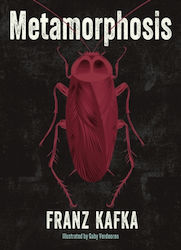
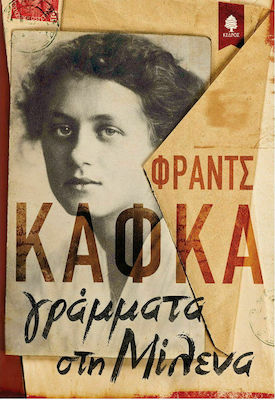
After high school, obeying his father’s wishes, Kafka, after attending some university courses in German literature, eventually studied law. At the university he met various German-speaking aspiring writers such as Max Brod, who became his close friend. He then worked for fourteen years, first at an insurance company and then at the Bohemia Workers’ Accident Insurance Institute. He devoted his nights to writing. This was his great passion. He knew that his destiny was writing, but he did not manage—did not dare—to make it his profession. Very few of his texts were published during his lifetime, such as the famous "The Metamorphosis" (1916), "In the Penal Colony", "A Country Doctor", as well as "Letter to His Father" (1919). In 1914 he became engaged to Felice Bauer, whom he had met at Brod’s home and with whom he had corresponded for two years, but he broke off the engagement because he felt unable to face marriage. Another attempt to marry Felice ended in failure, since in 1917 it became known that he was suffering from tuberculosis and he entered a sanatorium—with the support of his sister Ottla. In 1923, on a trip to the Baltic, he met the emancipated Jewish kindergarten teacher Dora Diamant and shortly afterward moved into her home in Berlin, trying to escape the influence of his family and devote himself to writing. He died of tuberculosis on June 3, 1924. In general, his life was simple, without many moves or long journeys. Without "great encounters." Shortly before he died, he asked Brod to destroy his works, an order that Brod fortunately disobeyed. Brod edited his three unfinished novels and published them: "The Trial" (1925), "The Castle" (1926), "Amerika" (1927).
Although a multi-page diary of his has survived (3,000 pages), much of Kafka’s life remains unknown. This is due in particular to the political events between 1933 and 1945: in Berlin, in the home of Dora Diamant, his faithful friend in the later years of his life, a bundle of his manuscripts, now considered lost, was seized by the Gestapo. In 1935 the publication of his works was banned. The witnesses to his life, his three sisters, friends, relatives, were killed by the Nazis in concentration camps. The archives were destroyed. His library and many of his letters were lost. His work, initially known only within a small literary circle in Germany, spread after his death in France, thanks to H. Breton, A. Camus and J. P. Sartre, then in England and America and more recently in Russia. The first translations into Czech were published in 1957 in Prague.