Jacques Lacarrière
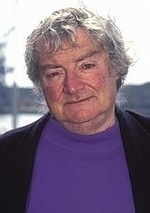
Jacques Lacarrière
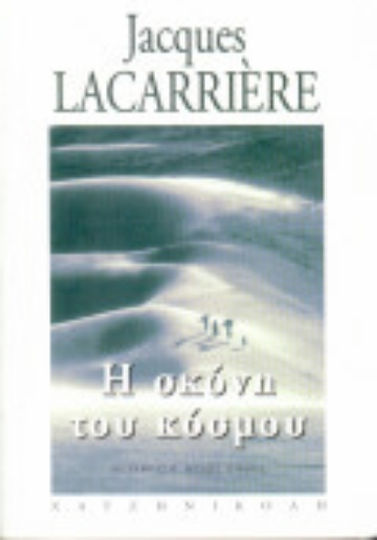
The author and Hellenist Jacques Lacarrière was born in Limoges, France, on February 2, 1925. He studied law and literature in Paris. In 1950, he set out on foot with the intention of reaching India, but ultimately chose Greece and the Near East, where he lived for many years, primarily on Hydra and Patmos, until 1966. Returning to France after the colonels' coup, he settled in Burgundy at his uncle's house, a carpenter, where he remained for the rest of his life. He was an admirer of ancient and, above all, modern Greece. With his characteristic passion, he managed to highlight the modern face of the country abroad and connect it with its history. He published novels, poems, travel impressions, art books, among others, and one of the best books written about Greece abroad, "Greek Summer" (1976). He translated Greek authors into French, including Prevelakis, Alexandrou, Tsirkas, Tahtsis, Vassilikos, Plaskovitis, Fragias, Seferis, Elytis, Ritsos, Patrikios, and Lampadaridou-Pothou. His works published in Greek include: "The Gnostics," Hatzinikoli, 1976, "The Enthusiasts," Hatzinikoli, 1977, "Greek Summer," Hatzinikoli, 1980, "The Charioteer" (trans. Maria Lampadaridou-Pothou), Ikaros, 1982, "Mary of Egypt," Hatzinikoli, 1984, "This Beautiful Today," Hatzinikoli, 1991, "The Writing Journey of a Philhellene," Hatzinikoli, 1992, "With Icarus' Wings," Hatzinikoli, 1995, "The Childhood of Icarus and Other Poems" (trans. Katerina Anghelaki-Rook), Patakis, 1997, "The Dust of the World," Hatzinikoli, 1999, "Erotic Dictionary of Greece," Hatzinikoli, 2002, "Aphrodite's Loves" (trans. Dimitris Kraniotis), Mimnermos, 2002, "Nicosia: The Dead Zone," Olkos, 2003. He died unexpectedly on September 17, 2005, due to complications following a simple knee surgery, at the age of 79. His body was cremated, and his ashes were scattered at sea off the coast of Spetses on November 3, according to his last wish. "A sea. On the sea, a shell. On the shell, a woman standing, naked. To her right, in the sky, two winds. To her left, a nymph. [...] A sea embracing a labyrinthine coast where a grove emerges. A shell with embossed ridges belonging to the genus Pecten jacobeus. Two Winds showering the open sea of waves with roses, undistracted. A nymph raising a mantle towards... the goddess. Behold! Venus approaches, just emerged, ready for the land. And as soon as her foot touches the ground, Eros will become a novel idea in the universe." ("L' Anadyomene"/ "The Emerging" from the collection "Aphrodite's Loves: Six Poems for Venus," trans. Dimitris Kraniotis, Mimnermos, 2002)


0
0