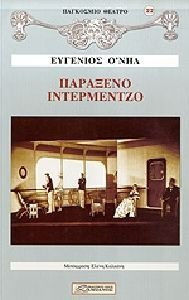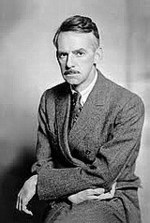
Eugene O' Neill
An American playwright, one of the most significant of the twentieth century, who was honored with the Nobel Prize in Literature (1936) and four times with the Pulitzer Prize for the works: "Beyond the Horizon" (1920), "Anna Christie" (1922), "Strange Interlude" (1928), "Long Day's Journey into Night" (1957).
The third son of James O'Neill, a famous actor of the time, and Ella Quinlan, he was born in a Broadway hotel and experienced traumatic childhood years, a fact that influenced both his personal life and his work. He was admitted to Princeton University, expelled, and never returned. He worked as a clerk in New York, left as a gold prospector to Honduras, and traveled as a sailor on merchant ships, gaining knowledge and observations particularly useful in shaping his characters. Determined to devote himself to writing plays, he abandoned wandering and attended relevant courses offered by Harvard University. His body of work is categorized into three periods: the early realistic period, distinctly marked by his personal wanderings; the expressionistic period, beginning in 1920, with clear influences from the philosophical ideas of Nietzsche, the psychoanalytic theories of Freud and Jung, and the dramaturgy of Strindberg; and finally, the mature realistic period, deeply influenced by the Greek tragedians. The works of the last period, imbued with the tragic sense of life and the tragedy of the author's own life, are considered by critics to be the great works of the greatest American dramatist. To the Greek audience, O'Neill's major works became known mainly through Katina Paxinou and Alexis Minotis, just as "Long Day's Journey into Night" did.