Vincent Van Gogh
Vincent Van Gogh
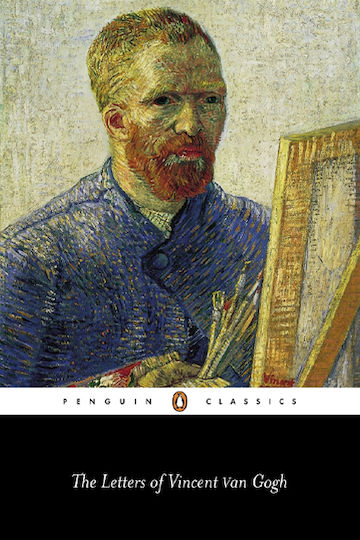
Vincent van Gogh (Vincent Willem van Gogh, March 30, 1853 - July 29, 1890) was a Dutch painter. During his lifetime, his work did not achieve success, nor was he recognized as an important artist. However, after his death, his fame spread rapidly, and today he is recognized as one of the most significant painters of all time. His influence on later movements such as Expressionism, Fauvism, and abstract art in general is considered pivotal. Vincent van Gogh was born in the Dutch village of Zundert and was the eldest of eight children in his family, the son of pastor Theodorus van Gogh. From a very young age, he showed tendencies toward melancholy and early psychological problems. At the age of 16, after unsuccessfully trying several professions, he engaged for a time in the art trade at the company Goupil & Company, where his brother Theo van Gogh was hired the following year. In 1873, the company transferred him to London and later to Paris. During this period, his interest in religion intensified, clearly influenced by his father's occupation. After being dismissed from his job in 1876, he returned to Amsterdam to study theology. His studies lasted for about a year, and in 1878 he was assigned a position as a preacher in Belgium, specifically in the impoverished Borinage area, where a mine operated. Van Gogh preached for about six months, showing particular interest in the poverty of the local people. This is also the period when he began to create small drawings and possibly decided to pursue art. In 1880, at the age of 27, he started taking his first painting lessons, but soon had a falling out with his teacher, Anton Mauve, over artistic issues. In the following years, he created works mainly influenced by the painting of Jean-Francois Millet, while traveling through the Dutch countryside painting subjects inspired by it. In the winter of 1885, he attended classes at the Antwerp Academy, but these were cut short when he was expelled by the academy's professor, Eugene Siberdt. Despite this, van Gogh managed to come into contact with Japanese art, from which he borrowed elements or often imitated its techniques. Several of his portraits also include a piece of Japanese art in the background. In the spring of 1886, he visited Paris, where he lived with his brother—a now successful art dealer—in the Montmartre area, a center of artistic activity. During his stay, he came into contact with Impressionists Edgar Degas, Camille Pissarro, Paul Gauguin, and Toulouse-Lautrec. He was significantly influenced by the Impressionist movement, particularly in terms of color use. Van Gogh himself is more classified as a Post-Impressionist painter. He often used Impressionist techniques but also developed a personal style characterized by the use of complementary colors that Impressionists typically avoided. Two years later, in 1888, van Gogh left the French capital and visited southern France and the Provence region. There are reports that he draws inspiration from the landscape and the rural life of the inhabitants, themes he attempts to capture in his paintings. During this period, he invents a unique technique of swirling with the brush, and his paintings are dominated by vibrant colors such as yellow, green, and blue, with notable examples being "Starry Night" and a series of paintings depicting sunflowers. The work "The Red Vineyard" from this period is also the only painting Van Gogh managed to sell during his lifetime. During his stay in Arles, he is visited by the painter Gauguin. However, after a few months, they have a severe disagreement, and due to his unstable mental health, Van Gogh cuts off part of his left ear, ending up in the local hospital. There are claims that Van Gogh had threatened to kill Gauguin and cut off his ear seeking a form of catharsis from his guilt. In 1889, he is admitted to the psychiatric center of the Saint-Paul Monastery in Saint-Rémy, where he remains for about a year, suffering from depression. During his stay there, he continues to paint. In May 1890, he leaves the psychiatric clinic and lives for a while in an area near Paris, where he is monitored by Dr. Paul Gachet, whom the painter Camille Pissarro had recommended to Van Gogh. During this period of medical supervision, Van Gogh produces only one work, a portrait of Gachet. In July 1890, Van Gogh shows symptoms of severe depression and ultimately shoots himself in the chest on July 27, dying two days later. After Van Gogh's death, his fame spread rapidly, culminating in major exhibitions of his works held in Paris (1901), Amsterdam (1905), Cologne (1912), New York (1913), and Berlin (1914). Over approximately ten years, he created more than 800 paintings and 1,000 smaller drawings. An extensive correspondence with his brother, comprising more than 700 letters, also survives.
-
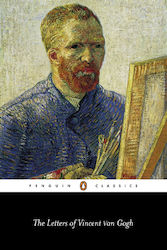
Biographies & Memoirs
-
Hobbies & Leisure Books
-
Art Books
-

All categories