Seamus Heaney
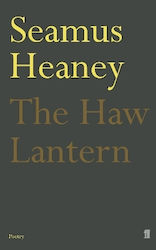
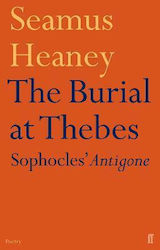
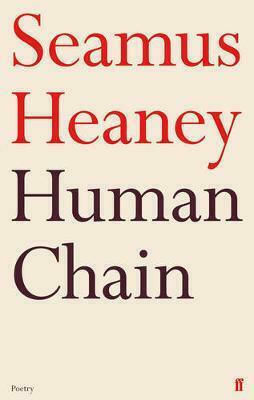
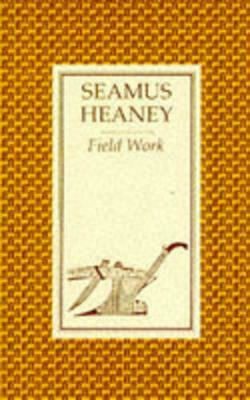
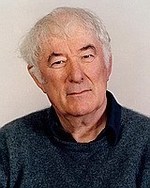
Seamus Heaney (1939-2013), often regarded as the "greatest Irish poet since William Butler Yeats," was born into a farming family in the parish of Mossbawn, County Derry, Northern Ireland, as the eldest of nine children. He studied (and later taught) English literature at Queen's University Belfast. He made his literary debut in 1966 with the poetry collection "Death of a Naturalist." This was followed by several other collections: "Door Into the Dark" (1969), "Wintering Out" (1972), "Stations" (1975), "North" (1975), "Field Work" (1979), "Station Island" (1984), "Haw Lantern" (1987), "Seeing Things" (1991), "The Spirit Level" (1996), "Electric Light" (2001), "District and Circle" (2006), and "Human Chain" (2010). A Catholic and a staunch supporter of Ireland's territorial integrity, Heaney was compelled to leave Belfast in 1972, the year of "Bloody Sunday," to settle permanently in the Republic of Ireland, dividing his time between Dublin and Boston, where he taught literature. He served as Professor of Poetry at Oxford University from 1989 to 1994 and at Harvard University from 1981 to 1997. In 1995, he was awarded the Nobel Prize in Literature; the news reached him in the Peloponnese, an Arcadia to which, as he said, both he and his poems often returned. He was also the recipient of numerous other awards during his lifetime, including the Geoffrey Faber Memorial Prize (1968), the E. M. Forster Award (1975), the PEN Translation Prize (1985), the Golden Wreath of Poetry (2001), the prestigious T.S. Eliot Prize (2006, for "District and Circle"), the Forward Prize (2010, for "Human Chain"), and two Whitbread Awards (1996 and 1999). From 1988 to 2006, he was Poet in Residence at Harvard University. Seamus Heaney was also an active essayist, translator, and a steadfast supporter of literature, with his books and lectures following his Nobel Prize win. Among other works, he authored theatrical adaptations of Sophocles' "Philoctetes" and "Antigone" ("The Cure at Troy," 1990, and "The Burial at Thebes," 2004, respectively), translations of the epic "Beowulf" in 1999, and Pushkin's poem "Arion" in 2002. In 2010, he suffered a stroke and experienced temporary paralysis, an ordeal he recounted in the poem "Miracle" from his final collection, "Human Chain." He passed away unexpectedly after a brief illness in Dublin on August 30, 2013, at the age of 74.