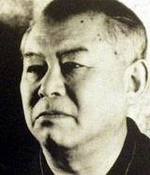
Junichiro Tanizaki
Jun'ichirō Tanizaki (1886-1965) was a true "son of Edo," born in Nihonbashi, the bustling commercial area near Tokyo's port, considered the cradle of the true successors of the feudal capital. However, about halfway through his life, he moved to the Kansai region, encompassing Osaka and Kyoto, the center of traditional Japanese imperial culture. In 1907, he published "The Funeral of a Spaniel" and "Uncertain Memories." In September of the following year, he enrolled in the Imperial University of Tokyo, in the Department of Japanese Literature. In 1911, he published his first collection of short stories titled "Tattoo," and a year later, his first novel "A Hot Soup." Many plays, short stories, and novels followed, often facing censorship issues. His passion for the West was fleeting in terms of cinema, food, and fashion, but it remained until the end of his life concerning Western literature, which he studied extensively and occasionally translated into his native language. Simultaneously, as the years passed, he became almost entirely absorbed by the traditions and culture of Kansai. He is considered one of the most significant figures in 20th-century Japanese literature, as his works cover a vast thematic and stylistic range, each representing a reference to a different literary genre. In 1964, he was elected an honorary member of the American Academy of Arts and Letters. He passed away on July 30, 1965, from kidney and heart failure at his home in Yugawara.






 Greek Fiction Books
 Greek Fiction Books