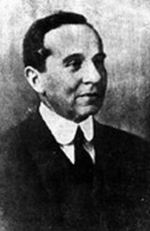
Argyris Eftaliotis
Argyris Eftaliotis (1849-1923) (pseudonym of Cleanthis Michailidis) was born in Molyvos, Lesbos, the son of teacher Konstantinos Michailidis. He spent his childhood and school years in his hometown, receiving his basic education at his father's private school. In 1866, after the death of his father, the then seventeen-year-old Argyris took on the responsibility of continuing to teach his classmates until the end of the year. Due to financial difficulties faced by his family, he emigrated in 1866. Initially, he worked in Istanbul with his mother's banker brother, and later moved to Manchester, England, where he befriended Alexandros Pallis and D.P. Petrocochino, becoming part of the core of the Demoticist movement. He was also an active member of the Greek Philological Society "Logios Hermes" in Manchester, delivered lectures, studied ancient Greek classics as well as English and French literature, and joined literary circles. His commercial career in England was successful, and he soon opened his own store. During the economic crisis of 1870-1880, he was hired by the Ralli Brothers trading house and settled in Liverpool, where he married Elizabeth Graham. His professional activities took him to various cities in England and to Bombay, India, with six interim visits to Greece until the end of his life. In 1891, he visited Paris and met Jean Psichari. In his later years, his mental health deteriorated, and he retired to Cab d'Antibes, France, where he died at the age of 74.
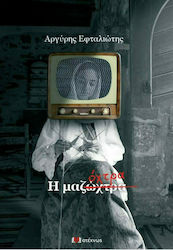
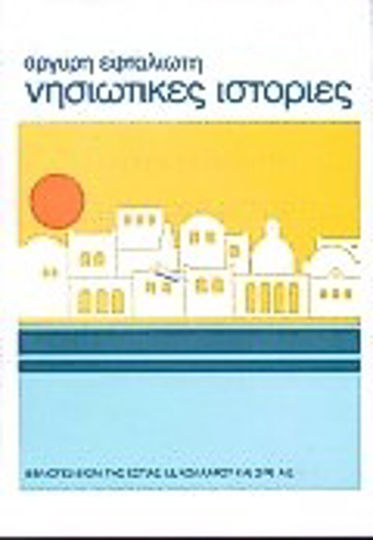
Eftaliotis's entry into the literary world began around 1869 with translations of poems and the writing of original poetic works in literary magazines such as the "Hellenic Library." He followed with translations of works by Byron and Macaulay. In 1889, encouraged by Alexandros Pallis, a close friend and spiritual guide, he participated in the Philadelphia Poetry Competition with his collection "Songs of an Exile," which received an honorable mention. The following year, he entered the same competition with the collections "The Mirror of My Tower" and "Words of Love," but did not win, prompting reactions from others, including Kostis Palamas, who praised Eftaliotis's work and attributed the injustice to his use of the Demotic Greek language, opposing the then-critic of the Philadelphia committee, Angelos Vlachos. Eftaliotis continued to write poetry, though not systematically. From 1891, he turned systematically to prose, cultivating the Demotic language and focusing thematically on the pain of exile and the longing of expatriates for their homeland. His most characteristic prose work is "Island Stories," published in 1894, a collection of ethnographic short stories he had been publishing since 1889 in "Estia." In 1900, he published "The Mazochtra" and "The Vourkolakas," his only theatrical work (inspired by the song "The Dead Brother" and aimed at renewing modern Greek dramaturgy with themes from contemporary history). In "The Mazochtra," Eftaliotis attempts a transition from simple ethnography to psychological insight. He also wrote a novel, "Manolis Delbenteris." In addition to his work in teaching prose and historical studies since 1892, he published "The History of Romiosyne" (1901) and "Historical Exposures" (1908). In 1914, he began translating Homer's "Odyssey," a project left unfinished due to his death. The continuation (books φ΄ - ω΄) was undertaken by Nikolaos Poriotis. For more biographical details on Argyrios Eftaliotis, see Manolis Gialourakis, "Eftaliotis Argyrios," Great Encyclopedia of Modern Greek Literature, Athens, Haris Patsis, n.d.; Martha Thomaidou-Morou, "Eftaliotis Argyrios," World Biographical Dictionary, Athens, Ekdotiki Athinon, 1985; M.G. Meraklis, "Argyrios Eftaliotis," Greek Poetry: Romantics - Palamas Era - Post-Palamas; Anthology - Literary History, pp. 262-265, Athens, Sokolis, 1977; and G.D. Paganos, "Argyrios Eftaliotis," Our Older Prose Tradition: From its Beginnings to the First World War VIII (1880-1900), Athens, Sokolis, 1997. (Source: Archive of Greek Authors, EKEBI).


 Greek Fiction Books



 Greek Fiction Books
 Greek Fiction Books