Lafcadio Hearn
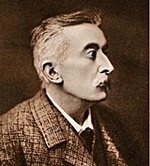
Lafcadio Hearn was born in Lefkada in 1850. His father was the Irish doctor Charles Bush Hearn, who was serving in the British-controlled Ionian Islands at the time, and his mother was Rosa Kassimati from Kythera. A transfer of his father to India led to the separation of his parents. Young Lafcadio then found himself in Dublin, where he experienced the first hardships due to the harsh behavior of his domineering grandmother. At the age of nineteen, he left for America, and after a life full of adventures, he ended up in the West Indies in 1887, where he stayed for two years as a correspondent for the American magazine "Harper's Magazine." As a correspondent for the magazine, he left for Japan in 1890, where he would spend the rest of his life. In Japan, he ended his collaboration with "Harper's Magazine" and, with the help of Professor Basil Hall Chamberlain and Itzito Hattori, found a position as an English teacher in the city of Matsue. In the beautiful, legendary Matsue, he lived for fifteen months. He developed a brotherly friendship with Professor Nishida Sentaro and, a year later, married Setsu Koizumi, the daughter of a local samurai whose family had fallen on hard times. Together, they had four children. During the same period, his articles began to be published in "The Atlantic Monthly" and various American newspapers, reflecting the strong attraction that Japan held for him. His writings were published in a book in 1894, titled "Glimpses of Unfamiliar Japan" (a book later considered a classic in Japan and began to be taught in schools). In 1892, he settled in Kumamoto, where he taught for three years in secondary education. In 1896, he received Japanese citizenship and took his wife's family name, Koizumi, and the personal name Yakumo. For Hearn, Shintoism and Buddhism were ways of daily individual and collective life, religions that people practiced rather than merely believed in. He himself remained agnostic. The Imperial University of Tokyo offered him the chair of Professor of English Literature. He settled in Tokyo, where he lived his most brilliant and fruitful writing period. His poor eyesight did not hinder his exploration of the "unknown" regions of Japan. However, in the spring of 1903, as he had predicted, the university officials forced him to resign under some pretext. His students protested strongly, and his position was re-offered, but under terms he could not accept. Three issues preoccupied him at that time: his desire to return to the West despite its conventions, his deteriorating health, and the future of his newborn daughter, Suzuko. In 1904, he accepted the position of Professor of English Literature at Waseda University in Tokyo. That same year, Lafcadio Hearn died at his home from heart failure on September 26, 1904, at the age of 54, and was cremated according to Japanese ritual. The Japanese consider him one of their national authors. Professor Basil Hall Chamberlain wrote: "Reading his writings, one feels the truth of what Richard Wagner stated: 'The only way to understand is to love.' If Lafcadio Hearn deeply understands Japan and makes it more comprehensible than any other writer, it is because he loves it deeply." His main works include: "Glimpses of Unfamiliar Japan" (1894), "Out of the East" (1895), "Kokoro" (1896), "Kotto" (1902), and "Kwaidan" (1904).
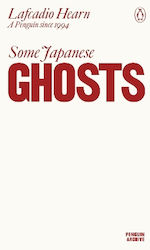
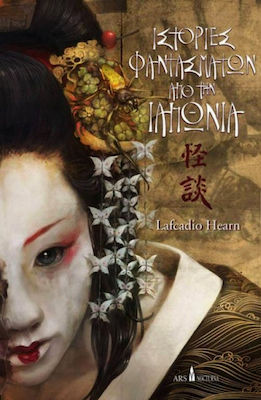 Greek Fiction Books
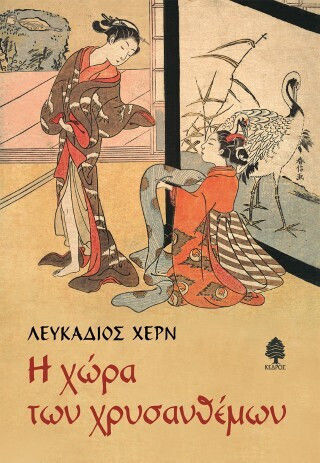 Greek Fiction Books
 Greek Fiction Books