Maurice Blanchot
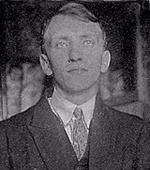
Maurice Blanchot
Maurice Blanchot (1907-2003) was born in the rural settlement of Quain in the Saône-et-Loire department of France, where his affluent family owned not only farms but also a beautiful and large residence. As an adult, he would return to its "high chamber" to write. An essayist and storyteller, Blanchot infused his work with the extreme experience of death, which he perceives as the "ordeal of the absence of an end." For Blanchot, the realm of literature is the realm of death. Each of his narratives is an experiment where the textual craft is tested to question its very foundation. They push literature to that zone where it self-reflects, self-destructs, and consumes itself through its internal movement. The author "has nothing to say," but "this nothing must be said." Solitary and stubbornly underground, Maurice Blanchot's work is among the most captivating of the post-war period. Following writers like Valéry or Bataille, Blanchot challenged the very existence of literature, its aesthetic, philosophical, ideological, and social functions: he set libraries ablaze, thus illustrating the phrase by Hölderlin, commented on by Heidegger: "Of all goods, language is the most dangerous." [...] "Language," says Blanchot, "is obscure because it says too much, opaque because it says nothing: ambiguity is everywhere." This is the risk of poetry because the poet is the one who "hears an uninterpreted language."
0
0