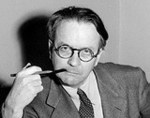
Raymond Chandler
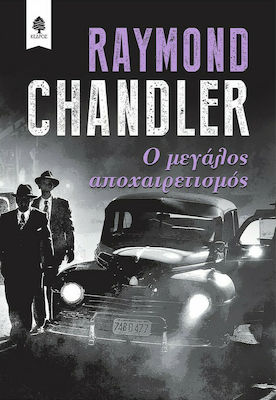
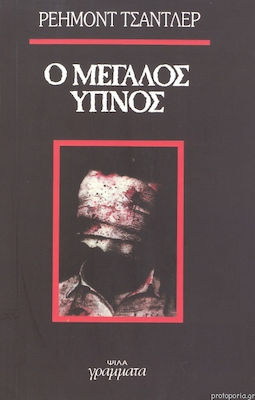
One of the greatest authors of detective fiction, Raymond Chandler was born in Chicago in 1888. When he was eight years old, his parents divorced, and he was forced to move with his mother to London, where he completed his education at the prestigious Dulwich College. He acquired British citizenship and pursued studies in France and Germany, after which he returned to London in 1907, intending to find a position in the civil service. He abandoned this path to focus on writing and worked for several newspapers as a reporter, columnist, and book critic. In 1912, he returned to America and settled in Los Angeles, where he began working as an accountant. After serving in the Canadian Army during World War I, participating in deadly battles in France in 1918 between Arras and Cambrai (he was the only survivor from his unit, which was completely wiped out by shelling), he ventured into business and became a senior executive at the Dabnay Oil Company in California. In 1924, he married Cissy Pascal, who was 18 years his senior and whom he met while she was still married. Due to the economic crisis of the early 1930s, he lost his job and turned definitively to writing, submitting stories to the magazine "Black Mask" of H.L. Mencken, G.L. Nathan, and later Joseph Shaw (his first appearance was with the novella "Blackmailers Don't Shoot" in 1933). By 1938, he had published sixteen stories and was working on his first novel, "The Big Sleep," which was released in 1939. It was an immediate success, introducing, according to one critic, "a new kind of detective novel, where the ingenuity of the plot and investigation is combined with a distinctive and unique literary style." His subsequent six novels enjoyed the same success: "Farewell, My Lovely" (1940), "The High Window" (1942), "The Lady in the Lake" (1943), "The Little Sister" (1949), "The Long Goodbye" (1954), and "Playback" (1958). All feature the detective Philip Marlowe. In 1950, he published 12 of his short stories that he did not later develop into novels, in two volumes ("Trouble is My Business," "The Simple Art of Murder" - the remaining eight were published posthumously in the volume "Killer in the Rain," 1964). Many of his books were adapted into films, starting with "Farewell, My Lovely" in 1941 by RKO, and "The High Window" in 1943 by 20th Century Fox, with his own contributions to the screenplays, which also led to a screenwriting job in Hollywood at Paramount Studios in 1943, with a salary of $750 per week. He later worked on the screenplays for several other films, such as Billy Wilder's "Double Indemnity" (1944), George Marshall's "The Blue Dahlia" (1946), and Alfred Hitchcock's "Strangers on a Train" (1951 - "The plot is quite silly, but apparently, I can't do anything else," he wrote about his adaptation of Patricia Highsmith's novel in a letter), all of which were nominated for an Oscar for screenplay. After the death of his wife Cissy in 1954, despite his international recognition, he began to suffer from depression and, while intoxicated, attempted to commit suicide with a revolver the following year. Meanwhile, his health deteriorated due to alcoholism, and he had to be hospitalized multiple times. However, in February 1958, he took a plane to N. In the spring of the same year, he traveled to Naples to interview the mobster Lucky Luciano, who had been deported by the American government. His life was ultimately cut short by pneumonia in March 1959, in La Jolla, California, where he lived and was cared for by Helga Greene, the same month he was elected president of the Mystery Writers Association in New York.
In an autobiographical note he sent in 1950 to his English publisher, Hamish Hamilton, Raymond Chandler writes: "... As a mystery writer, I believe I am a kind of anomaly, since most mystery writers of the American school are semi-educated; I am not only educated but also an intellectual, as much as I detest that term. One might say that a classical education is a rather poor foundation for writing novels in a hard, everyday language. I believe the opposite. A classical education saves you from being deceived by the showiness that modern fiction is full of."