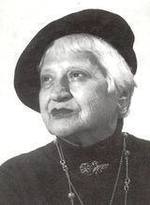
Dido Sotiriou
Dido Sotiriou (1909-2004) was a novelist and journalist. She was born in Aydin, Asia Minor, the daughter of Evangelos Pappas and Marianthi Papadopoulou. In 1919, she moved with her family to Smyrna, and after the catastrophe of 1922, they sought refuge in Greece. In Athens, she completed her secondary education with teachers including the writers Kostas Paroritis and Sofia Mavroeidi-Papadaki. She attended the French Institute of Athens and in 1937 took courses in French literature at the Sorbonne University for a few months. From 1936, she turned professionally to journalism. She collaborated with the magazine "Gynaika" (as editor-in-chief) and the newspapers "Neos Kosmos" and "Rizospastis" (editor-in-chief from 1944). During the German occupation, she worked with Melpo Axioti, Elli Alexiou, Elli Pappa, Titika Damaskinou, Ilektra Apostolou, Chrysa Chatzivasileiou, and other Greek women of the resistance. She participated in the League of Nations conference in Geneva in 1935, where she met Lenin's companion Alexandra Kollontai, and in the founding conference of the Women's International Democratic Federation in 1945 in Paris. She made her literary debut in 1959 with the publication of the novel "The Dead Await." Her works have been translated into many foreign languages, with a part of her work achieving success abroad, particularly in Turkey. Dido Sotiriou belongs to the Greek prose writers of the interwar period. Her work is characterized by realism, with a strong presence of autobiographical elements and the author's emotional involvement in the adventures of her characters. Her themes draw from the Asia Minor catastrophe, the civil war period, and the post-civil war period of Greek history. With "Bloody Earth," Sotiriou began her journey towards a writing style that combines novelistic technique with a historical perspective on her themes, a path she continued in her next two novels, "The Command," about the Belogiannis affair, and "We Are Being Demolished." She was honored with the Abdi Ipekci Greek-Turkish Friendship Award in 1983, the Special State Prize for Literature in 1989, the Academy of Athens Award in 1990, and the Order of the Phoenix in 1995. In 2001, the Society of Authors established the "Dido Sotiriou" award in her honor, which is awarded "to a foreign or Greek author whose writing highlights the communication of peoples and cultures through cultural diversity." She passed away in Athens on September 23, 2004. For more biographical details on Dido Sotiriou, see Alexis Ziras, "Sotiriou Dido," in "World Biographical Dictionary," vol. 9b, Athens, Ekdotiki Athinon, 1988; Vangelis Kassos, "Dido Sotiriou," in "Postwar Prose; from the War of '40 to the Dictatorship of '67," vol. Z, Athens, Sokolis, 1988; Demosthenes Kourtovik, "Dido Sotiriou," in "Greek Postwar Writers: A Critical Guide," Athens, Patakis, 1995; and Michalis M. Meraklis, Dora Menti, "Sotiriou Dido" in "Dictionary of Modern Greek Literature," Athens, Patakis, 2007.
(Source: Archive of Greek Writers, born from the 18th century to 1935, EKEBI.)
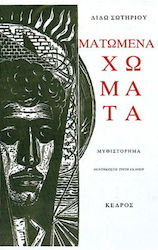
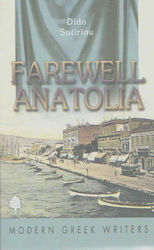


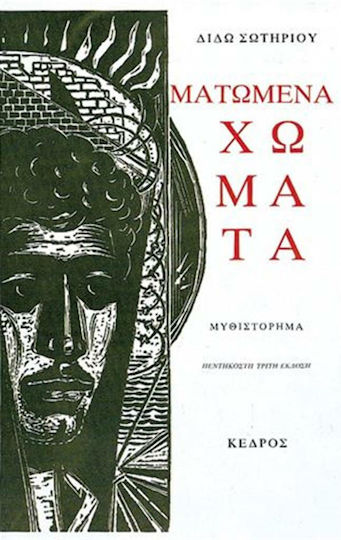
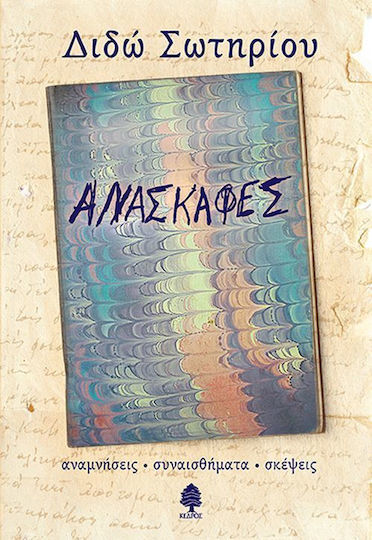 Greek Fiction Books
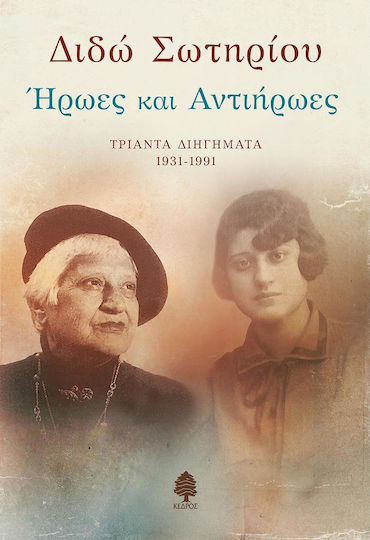 Greek Fiction Books