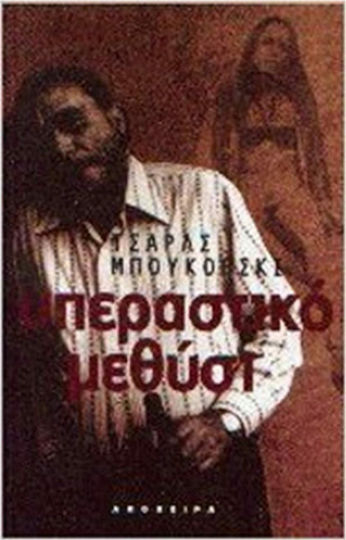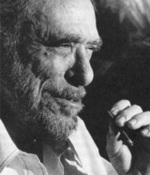
Charles Bukowski
Heinrich Karl (Henry Charles) Bukowski was born in Andernach, West Germany, on August 16, 1920. His German mother, Katharina Fett, and his father, Henry Bukowski, an American soldier of Polish descent, met during the American occupation in Germany at the end of World War I. In 1922, the couple and young Charles emigrated to the USA and settled in Los Angeles. Bukowski was destined to spend most of his life in the City of Angels. His childhood and teenage years were marked by American prejudice against his German heritage, continuous abuse from his father, and the disfigurement of his features due to a painful form of acne—experiences he later recorded in the novel "Ham on Rye" (1982). From 1939 to 1941, he attended journalism and literature classes at Los Angeles City College. In 1941, he moved to New York to become a writer. However, his endeavor did not succeed... In 1944, he published his first story, "Aftermath of a Lengthy Rejection Slip," in the magazine "Story" and returned to Los Angeles. There, he met one of the most significant women in his life, Janet Baker, ten years his senior and an alcoholic, like himself. He shared the next ten years of his journey with her. During this time, he wandered across the country, working as a truck driver, elevator operator, in a dog food factory, and other odd jobs that would provide him with a living and, primarily, the alcohol he consumed in large quantities. The experiences he gained from these wanderings served as material for his works. Many of them are included in the screenplay for the movie "Barfly" (1987), where Henry Chinaski (or Hank), Bukowski's literary alter ego, is portrayed by Mickey Rourke. In 1955, Bukowski, already married to Barbara Frye, the editor of a small magazine, wrote poetry for the first time after a health scare that nearly proved fatal. His marriage to Frye lasted less than two years. In 1958, he took a job again, this time as a clerk at the Los Angeles Post Office. According to him, the approximately ten years he spent there were, from a creative standpoint, the most barren and inactive. However, according to other sources, he continuously published texts in small magazines and became known in poetic circles as "the king of the little magazines." From 1960, he even maintained the weekly column "Notes of a Dirty Old Man" in the underground newspaper "Open City." Bukowski had countless affairs and fleeting relationships throughout his life. In 1964, his daughter Marina Louise was born, the result of his relationship with his admirer Frances Smith. Despite the fact that the relationship with the mother did not last long, Bukowski maintained a special relationship with his daughter until the end of his life. In 1966, publisher John Martin founded the publishing house Black Sparrow Press, with Bukowski as its main author. The acquaintance between the two men was to leave an indelible mark on Bukowski's life: in 1970, Martin offered him $100 a week for life, so he could devote himself exclusively to writing. Having achieved financial independence, Bukowski resigned from the post office. His productivity skyrocketed, and in a very short period, he completed his first novel, "Post Office" (1971). In 1985, he married Linda Lee Beighle, with whom he lived until the end of his life. Bukowski died of leukemia in March 1994, in his beloved Los Angeles, enveloped in the mantle of a great writer whose books were loved in Europe, as well as by a significant portion of the American public. His work, largely autobiographical, includes more than forty-five books of poetry and prose, as well as novels. Many of his works have been adapted into films. Beyond the author's personal experiences, Bukowski's works reflect the marginal, anarchic side of American reality, which, until recently, American literature either condemned or deliberately ignored. In contrast, the reception he received from the European audience, from the moment they first encountered him, was impressively warm. His work has been translated into more than a dozen languages. Nevertheless, a large part remained unpublished until recently.

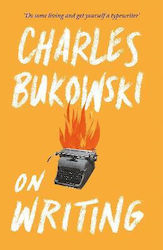

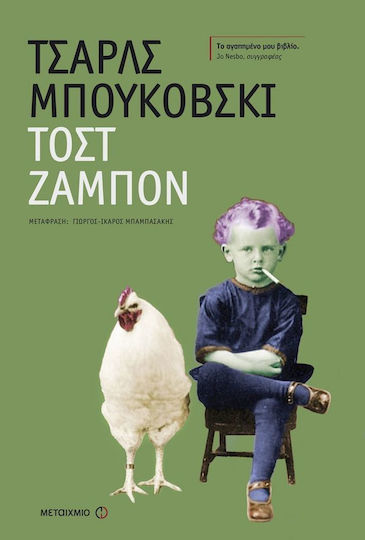
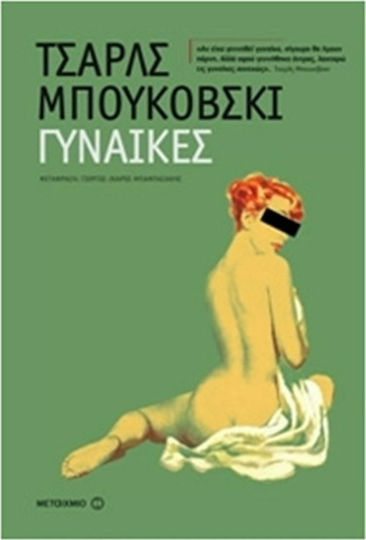
 Greek Fiction Books
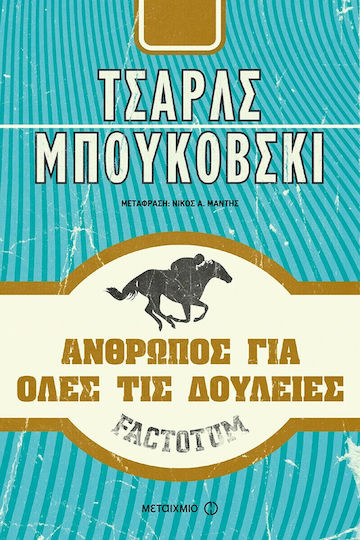 Greek Fiction Books