Kurt Vonnegut
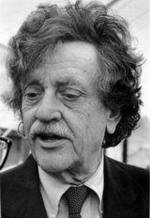
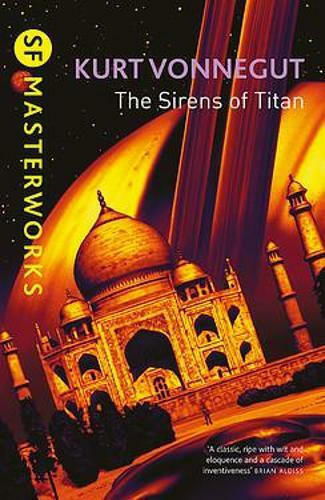
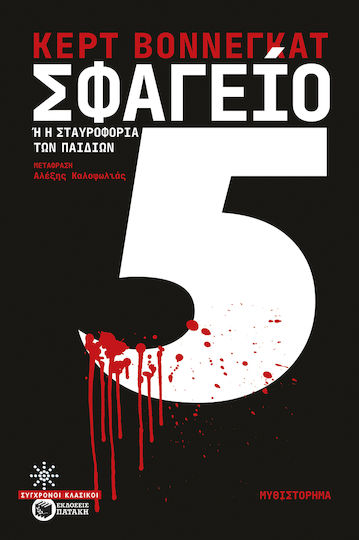
Kurt Vonnegut (1922-2007) was born in Indianapolis, Indiana. His father was an architect, and his mother came from a wealthy family. He began studying anthropology at Cornell University, but his plans were disrupted by World War II, and he was drafted into the army a year after Pearl Harbor. On Mother's Day in 1944, his mother committed suicide, and during the Battle of the Bulge in late 1944, he found himself behind enemy lines and was captured on December 14. He survived the bombing of Dresden in February 1945 (135,000 people did not survive) by hiding in an underground slaughterhouse, "Slaughterhouse-Five," and immediately afterward, the Germans brought him and other prisoners to the surface to help bury the dead. "There were so many corpses," Vonnegut commented, "that they eventually brought in guys with flamethrowers; all those bodies of dead civilians were reduced to ashes." This event haunted him forever and, in a way, is why he became a writer. After the war, he studied biochemistry at the University of Chicago, married his school friend, and in the late 1940s, he worked as a police reporter. In 1947, he moved to New York, where he was hired as a public relations officer at General Electric. His first novel, "Player Piano" (1952), was set in a mechanized society, contributing to its classification as science fiction. It was followed by "The Sirens of Titan" (1959), where human history is described as a random event caused by an alien planet searching for a spaceship part. In "Cat's Cradle" (1963), his first commercial success, a group of islanders in the Caribbean adopts a new religion, while in "Slaughterhouse-Five" (1969), Vonnegut reconstructs his Dresden experience using the time-reversal technique, a characteristic of science fiction literature. His technique of discussing war through the lens of science fiction impressed even writers like Graham Greene, and today the book is considered one of the most important American novels. Kurt Vonnegut wrote plays, short stories, articles, and essays. He primarily lived in New York. "A Man Without a Country" was his last book, featuring a series of autobiographical texts that include scathing comments on the Bush administration. In August 2006, commenting on a novel he would never finish, he said: "I wrote books. Many. Please, I did what I had to do. Can I go home now?" On April 11, 2007, it seems his wish was granted: on his official website, www.vonnegut.com, a cage with an open door has appeared since then.
Kurt Vonnegut's alter ego is Kilgore Trout, an old science fiction writer whose books are no longer in circulation. Trout is the protagonist in the novel "Breakfast of Champions" and makes brief appearances in many other Vonnegut books. According to the creator of this wise but fictional character, Trout was born in 1907 on a Bermuda island and later moved to Dayton, Ohio. He wandered across the country, did manual labor, and wrote numerous science fiction books. By 1974, he had written one hundred and seventeen novels and two thousand short stories. Among them, Vonnegut mentions "Gospel from Outer Space," "Maniacs of the Fourth Dimension," "Pan-Galactic Three-Day Pass," "The Planetary Omnivores," and others, which, however, have not been published because Trout throws them here and there, into trash bins. Once, when he decided to publish something, he unknowingly approached a pornography publisher, resulting in some of his stories being published in magazines with nude girls. In reality, "Trout" has only written one story with erotic content. Kilgore Trout stayed for a while in a small town in Massachusetts and a small town in Indiana, but spent his life wandering. He had a son, Leon, a Vietnam deserter, who was killed in an industrial accident in Sweden. Some say that Kurt Vonnegut was inspired to create Trout by the science fiction writer Theodore Sturgeon. Vonnegut himself says: "Kilgore Trout is my only character who had enough imagination to realize he was the creation of another person..."



 Greek Fiction Books
 Non-Greek Fiction Books
 Greek Fiction Books