Wilhelm Reich
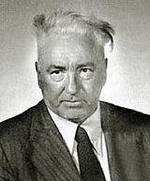
Wilhelm Reich
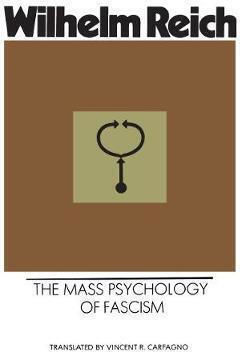
He was born on March 24, 1897, in Galicia, a region that was then on the eastern frontier, part of the Austro-Hungarian Empire. His parents, who were Jewish by faith, were non-fanatical and assimilated with the local population. During World War I, Reich served as an officer in the Austrian army. He later studied medicine, became a student of Freud, and from 1923 began working as a pathologist and psychoanalyst. More optimistic than his mentor but equally impetuous and radical, he developed his own ideas about "neurosis" in his books "The Function of the Orgasm" (1927) and "Character Analysis" (1933). He extended these ideas into politics, joining the Communist Party, and in 1933 he wrote "The Mass Psychology of Fascism." The triumph of Nazism in Germany forced him to begin his wanderings in Vienna, Denmark, Sweden, and Norway. However, the communists had already pursued him as "sex-centric," while psychoanalysts accused him of being overly involved in politics. He eventually settled in New York, United States of America. Having discovered bioenergy, or as he called it "orgone," and the "orgone accumulator," he engaged in cancer treatment and the origin of life. In 1940, he wrote "Listen, Little Man!" where, with tremendous passion and great wisdom, he addressed his fellow humans, calling them both victims and perpetrators. In 1951, he wrote "The Murder of Christ." In 1947, he clashed with American pharmaceutical companies that prohibited him from using and distributing his orgone accumulators. In 1956, he was imprisoned, and in 1957, he died at the age of 60 in a federal penitentiary. Today, his ideas about orgasm and pleasure, the right to sexual freedom and liberation from guilt, the recognition of the need for affection and warmth for newborns, the advantages of natural childbirth and breastfeeding, the role of repression in the creation of illness, and many others such as the function of orgone and the orgone accumulator are considered fundamental truths by both everyday people and serious researchers. However, there are still many of his ideas that only he, like a Don Quixote, had and fought against.
0