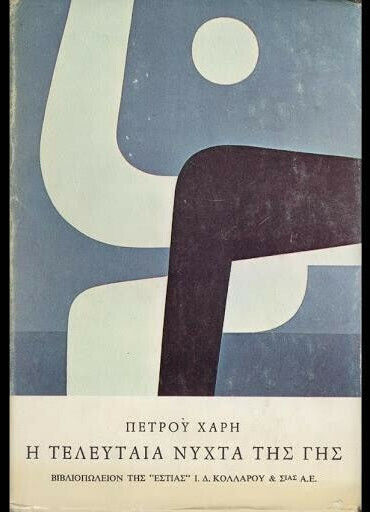
Petros CHaris
Petros Haris (1902-1998). Petros Haris, whose real name was Ioannis Marmariadis, was born in Athens, the son of Nikolaos Marmariadis from Crete. He completed his high school education in Athens and then enrolled in the Law School of the University, graduating in 1924. Immediately after, he began collaborating with Athenian newspapers and the magazine Noumas as an editor and literary associate. He worked at the School of Fine Arts (as Secretary and later General Secretary with the rank of General Secretary of the Ministry) until he retired in 1964 with the title of Honorary General Secretary. In 1933, he took over the direction of the magazine Nea Estia (after the departure of Grigorios Xenopoulos) and remained in that position until 1987. Under his leadership, Nea Estia was awarded the Academy of Athens Prize in 1946. He received the First State Prize for Travel Literature for his work "Cities and Seas," the Order of George I, the Golden Cross of the Athonite Millennium, and the Holy Cross of the Apostle and Evangelist Mark. He served as a member of the Board of Directors of the National Theatre, a member of the judging committee for the State Literary and Theatre Awards and the Parnassos Theatre Awards, a member of the Group of Twelve, the National Society of Greek Writers, the Kostas and Eleni Ouranis Foundation, the Union of Greek Theatre and Music Critics, and President of the Class of Letters and Fine Arts (1973). He was a member of the Academy of Athens and was elected its president in 1977. He first appeared in the field of narrative literature in the pages of the magazine "The Children's Formation" under the pseudonym "Blue and White Banner." His publications followed in Noumas, and in 1924, his first collection of short stories, "The Last Night of the Earth," was published. His early works are part of the Symbolist movement, as expressed in Greece mainly through Konstantinos Chatzopoulos. His writing is characterized by an essayistic style, subdued tones, and meticulous form. The literary genre he primarily cultivated was the short story, but he also wrote travel texts and two novels, "Days of Wrath" (1979) and "The Tornado" (1992). For more biographical details on Petros Haris, see Ziras Alex., "Haris Petros," World Biographical Dictionary 9b. Athens, Ekdotiki Athinon, 1988, Korfis Tasos, "Petros Haris," Interwar Prose: From the First to the Second World War (1914-1939) VIII, pp. 288-339. Athens, Sokolis, 1993, and Chatzifotis I.M., "Haris Petros," Great Encyclopedia of Modern Greek Literature 12. Athens, Hari Patsi, n.d. (Source: Archive of Greek Writers, EKEBI).

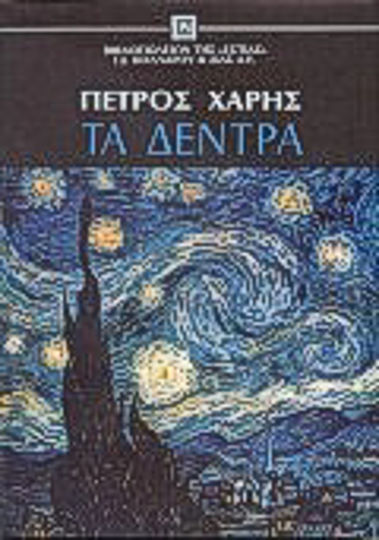
 Greek Fiction Books
 Greek Fiction Books
 Greek Fiction Books
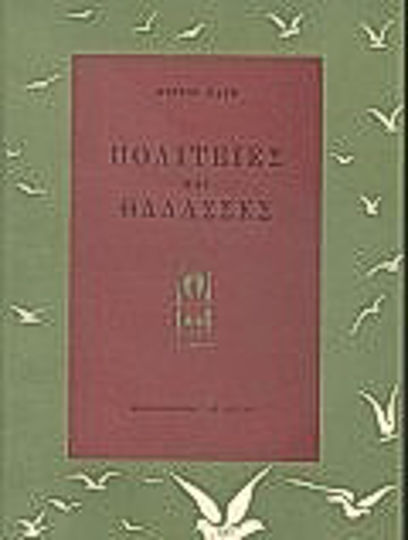 Greek Fiction Books