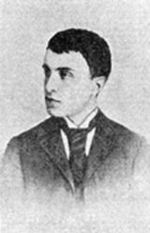
Nikolaos D. Episkopopoulos
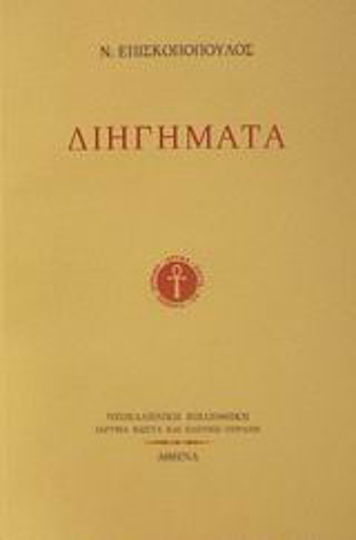
Nikolaos Episkopopoulos (1874-1944). Nikolaos Episkopopoulos was born in Zakynthos, the son of Dionysios Episkopopoulos and his second wife, Adrianis Sigourou, a cousin of the poet Marinos Sigouros, who instilled in him a love for literature and foreign languages. In Zakynthos, he attended the Greek School but left in the second grade and continued as a self-taught student, fervently studying literary and scientific texts. At the age of fifteen, he worked as an assistant pharmacist and a year later published a literary almanac where he shared his writings. After his father's death, he moved with his mother to Athens in 1892 and continued his studies. In 1893, he made his first official appearance in literature by publishing the short story "Ut diese mineur" in the newspaper Asty, facilitated by Grigorios Xenopoulos. The story was enthusiastically received by Dimitrios Kaklamanos and led to his hiring as a permanent editor at the newspaper. He went on to publish prose, poetry, chronicles, translations, and critical essays in various publications such as the National Almanac of Konstantinos Skokos, Estia, Panathinaia, Art of Konstantinos Chatzopoulos, and Our Magazine by Gerasimos Vokos, among others, activities that integrated Episkopopoulos into the Athenian literary circles. He was associated with Grigorios Xenopoulos and Pavlos Nirvanas and frequented the literary salons of Georgios Drosinis, Georgios Souris, and Kallirhoe Parren. During Anatole France's visit to Athens, Episkopopoulos guided him through the city's archaeological sites and developed a friendship with him and his companion, Madame Cavaillé. They suggested he move to Paris, which he did in 1904 with his wife and daughter, Adrianis. In Paris, Episkopopoulos became known as a writer, scholar, critic, and memoirist of Anatole France under the pseudonym Nicolas Segur, collaborating with renowned publications such as Figaro, Matin, and Revue des revues. He died in Paris from hemiplegia. Nikolaos Episkopopoulos's literary work is characterized by aestheticism, drawing inspiration from authors like Edgar Allan Poe, Charles Baudelaire, and Anatole France. His language was an elaborate form of Katharevousa with a distinct personal style, which he adapted to his unique narrative technique. This technique, far from realism and often incorporating elements of the fantastical and the paradoxical, emphasized internal plot development, depicting the dramatic portrayal of the psychological state and evolution of the characters or the author himself. For more biographical details on Nikolaos Episkopopoulos, see Avouris Spyr., "Episkopopoulos Nikolaos," Great Encyclopedia of Modern Greek Literature 6. Athens, Haris Patsis, n.d., and Dallas Giannis, "Nikolaos Episkopopoulos," Our Older Prose; From its beginnings to the First World War IX (1900-1914), pp. 24-50. Athens, Sokolis, 1997. (Source: Archive of Greek Writers, EKEBI).
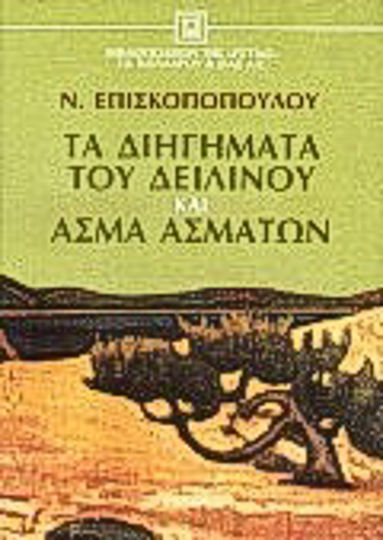
 Greek Fiction Books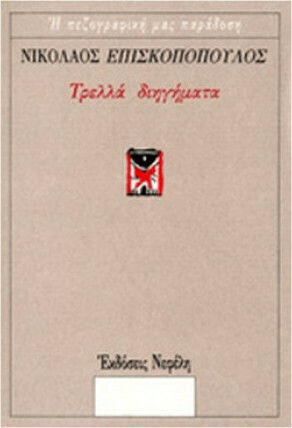
 Greek Fiction Books
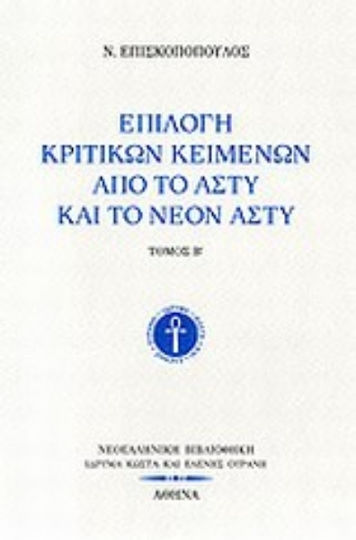 Greek Fiction Books
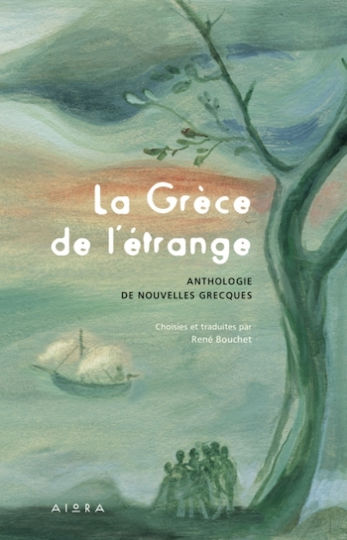 Non-Greek Fiction Books