Kostas Oyranis
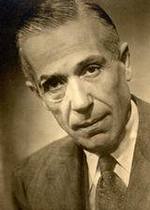
Kostas Oyranis
Kostas Ouranis (1890-1953). Kostas Ouranis was born in Constantinople, and his real name was Kostas Nearchos. His father, Nikolaos Nearchos, hailed from Kynouria, and his mother, Angeliki, née Giannousi, was from Leonidio, Arcadia, where Ouranis spent his childhood. He later attended the Gymnasium of Nafplio and completed his secondary education in Constantinople (Robert College and Hatzichristou High School). In 1908, he moved to Athens and briefly collaborated with Vlasis Gavriilidis' Acropolis. He left for studies in Europe but preferred the cosmopolitan lifestyle, mingled with bohemian circles, and contracted tuberculosis. He was hospitalized for two years in a sanatorium in Davos, Switzerland. There, he met his first wife, Manuela Santiago from Portugal, whom he later divorced. Around 1930, he married Eleni Negreponti, a writer and literary critic known by the pseudonym Alkis Thrylos. In 1920, he was appointed as the general consul of Greece in Lisbon and returned to Athens four years later, where he began working as a journalist (director at Eleftheros Logos, contributor to Noumas, Daphne, The Artist, Letters (Alexandria), New Life (Alexandria), The Muse, Free Tribune, Eleftheros Logos, the National Herald of America, etc.). He traveled extensively, but his health, which never fully recovered and worsened after the German occupation, forced him to remain in Athens. He died in 1953 from a heart attack at the Papanikolaou sanatorium. Kostas Ouranis' love for literature dates back to his youth. While still a student at Robert College, he wrote a poem about the destruction of Anchialos, and in 1908, he appeared in the columns of the magazine Hellas. His official debut in the literary world occurred in 1909 when he published his youthful poetry collection Like Dreams, which he later renounced, considering his first creation to be the collection Spleen, printed in 1912. This was followed by Nostalgias (1920) and Migrations, poems published in magazines and newspapers, which were first compiled after the poet's death in the 1953 edition Poems. He also engaged in prose (Achilleus Paraschos), travel literature (Sol y sombra, Sinai, the God-trodden Mountain, Azure Roads, Travels in Greece, and others), chronicle writing, interviews, and published the critical study Charles Baudelaire (1918). Ouranis is placed among the so-called decadent or neo-romantic Greek poets of the interwar period (Karyotakis, Agras, Lapathiotis, Kleon Paraschos, and others), and he was significantly influenced by Baudelaire. His work is characterized by strong symbolic influences, with a dominant cosmopolitan character, a melancholic tone, a sense of unfulfilled happiness, nostalgia, boredom, and a desire for escape, which is, however, undermined by a contemplative lethargy. For more biographical details on Kostas Ouranis, see Tellos Agras, "Ouranis Kostas," Great Greek Encyclopedia 19. Athens, Pyrros, 1932, Alex. Argyriou, "Ouranis Kostas," World Biographical Dictionary 8. Athens, Ekdotiki Athinon, 1988, Loukas Kousoulas, "Kostas Ouranis," Interwar Prose: From the First to the Second World War (1914-1939) Vol. VI, pp. 316-363. Athens, Sokolis, 1993 and Stamelos Dimitris, "Ouranis Kostas," Great Encyclopedia of Modern Greek Literature 11. Athens, Hari - Patsi, n.d. (Source: Archive of Greek Writers, EKEVI).

 Greek Fiction Books
Χριστούγεννα και Χιονιάς, Anthology
Collective Work, 2013 , Cover: Hard , Narcissus
from16,64 € at 2 stores0

0