James D. Watson
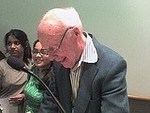
James D. Watson
James Dewey Watson (USA, 1928) is one of the greatest living molecular biologists. The discovery of the DNA structure by him and his fellow scientists, Francis Crick, Maurice Wilkins, and Rosalind Franklin, not only brought about a significant change in how we perceive the world around us but also rapidly accelerated advancements in the field of genetics and the science of biology. It could be said that Watson showed signs of his exceptional intelligence from a young age, as he entered the University of Chicago at just 15 years old to study zoology. However, his interest soon shifted to genetics, particularly mutations. For this reason, he began his doctoral dissertation under Salvador Luria, who had already won the Nobel Prize for his work on genetic mutations. In 1950, Watson was studying phages and decided to travel to Copenhagen to work alongside biochemist Herman Kalckar. A year later, with his interest already turned to DNA study, he managed to join a post-doctoral research program at the Cavendish Laboratory at the University of Cambridge in England. There, he embarked on the great journey toward recognition with the publication of the DNA structure theory in 1953 in the reputable scientific journal "Nature." Watson then announced, "we have discovered the secret of life." In 1962, he, along with his collaborators Crick and Wilkins (Franklin had died in 1958 from cancer), won the Nobel Prize in Physiology or Medicine. Since then, he has continued to work in the field of genetics, holding significant positions at universities and research institutions in the United States. Many years later, in October 2007, during an interview with "The Sunday Times Magazine" on the occasion of the release of his autobiography ("Avoid Boring People: Lessons from a Life in Science," Knopf), he was accused of expressing offensive views regarding the intelligence of individuals of African descent, with a controversial reference to data (?) from his science. His tour in the UK was canceled, and he was forced to resign the following year from his position as chancellor at Cold Spring Harbor Laboratory (CSHL) - though he was awarded the title of chancellor emeritus. In the following years, Watson attempted to mitigate the impressions created about him (e.g., in a 2008 BBC interview, stating "I am not a racist"). However, the criticisms on this matter followed him even to the event organized in his honor by the University of Patras in Greece on April 14, 2011, for his appointment as an honorary doctor.
0