Richard Rorty
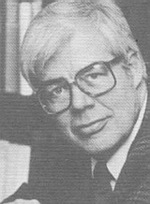
Richard Rorty
Richard Rorty (1931-2007) was born in New York. He studied philosophy at the University of Chicago under the tutelage of Rudolph Carnap, Charles Hartshorne, and Richard McKeon, and completed his doctoral dissertation at Yale in 1956. He taught at Wellesley College, Princeton, the University of Virginia, and the Department of Comparative Literature at Stanford University. He is considered one of the most important representatives of neopragmatism. Rorty denies that we can know the truth. By renewing the thoughts of James and Dewey, he argues that what matters is not whether our ideas correspond to reality but whether they help us live in a more just and democratic society based on the concept of solidarity. To the Platonic and Cartesian foundational tradition, Rorty contrasts a practical philosophy of hope. He passed away on June 8, 2007, at the age of 75, from cancer. His work includes, among others, the books: "Philosophy and the Mirror of Nature" (1979), "Consequences of Pragmatism" (1982), "Contingency, Irony, and Solidarity" (1989), "Achieving our Country: Leftist Thought in Twentieth Century America" (1998). Assistant Professor of Political Science at the University of Athens, Dimitris A. Sotiropoulos, wrote in the "New Eras" section of the newspaper "To Vima" on June 17, 2007, on the occasion of his death: "His research extended into unusually many fields, including the philosophy of language, epistemology, and political analysis, while his work reveals influences from a wide range of currents of thought, from pragmatism and Darwinism to the philosophy of Heidegger and Wittgenstein and the American Left. In a paradoxical sense, Rorty was the least analytical of contemporary American philosophers, in the sense that he tried to bridge Anglo-Saxon, particularly analytical, and continental philosophy. Indeed, his work was discussed in circles of the European Left and in France, as it 'conversed' with that of Derrida and Foucault. At the same time, his philosophy retained distinctly American elements, partly due to his self-placement in Dewey's philosophical current of pragmatism and partly due to a spirit of renewal, characteristic of the 'New World,' and the optimism for a better future that his more political writings exuded. [...]"
0
0