Umberto Saba
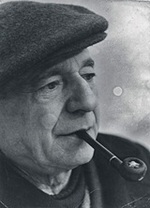
Umberto Saba
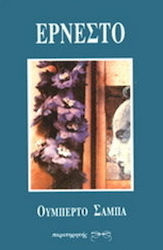
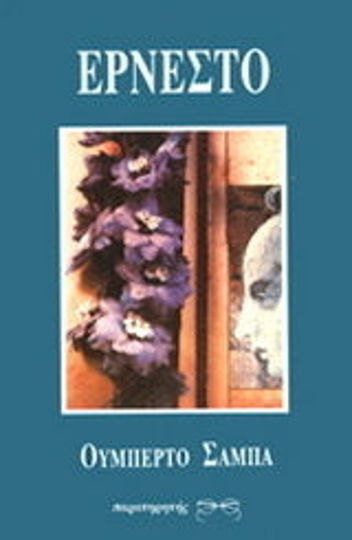
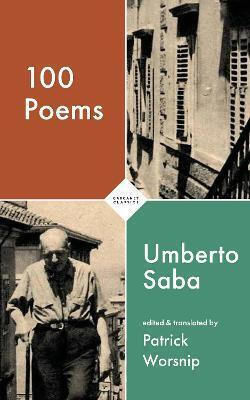
Umberto Saba (real name Umberto Poli) was born in Trieste on March 9, 1883, to Catholic Ugo Edoardo Poli and Felicita Rachele Cohen, whose family had a tradition in the trade of the Jewish ghetto of Trieste. Although he was born within the borders of the Austro-Hungarian Empire, to which Trieste belonged at the time, Umberto Saba was naturalized as Italian thanks to his father's citizenship. Ugo Edoardo Poli, a cheerful and morally light character, abandoned his wife at the beginning of her pregnancy (Saba would meet him only once in his life, as an adult, and would write: "my father was for me the murderer"), and young Umberto was entrusted to the care of a Slavic wet nurse, Peppa Sabaz. He formed a deep bond with her, considering her the "mother of joy," and when his biological mother forcibly separated him from her, he began to feel perpetually inconsolable. Many years later, in 1929, he would sing of this constantly threatened innocence of his childhood in the poems of the collection "Il piccolo Berto" ("The Little Berto"). As a young man, Saba attended the "Dante Alighieri" Gymnasium until the fourth grade, when he was forced to abandon his studies due to the particular hostility shown to him by a teacher (as he would later say himself). Through his mother's intervention, he was hired as an apprentice in a commercial house in Trieste. The autobiographical hero of this period, Ernesto, surprises us not so much with the things he discovers (it is an initiation into adult life that includes homosexual experience) but with his bare vocabulary, his courage in choosing words that, without circumlocution or verbal tricks, go straight to the essence of things. His eponymous and unique (unfinished) novel, due to its "daring" content, was published many years after his death, only in 1975 by "Einaudi" publishers. In 1903, Saba was in Pisa, and from 1905 to 1908 in Florence. These were undoubtedly very important years for the formation of his literary personality, but for which we have incomplete information. Saba himself, always willing to clarify various moments of his life and poetry, almost silences this period. In 1908, he served as a volunteer in the military in Salerno, and upon returning to Trieste, he married Carolina Wölfler (or Lina Carmen in his poems), about whom Montale would write that she is "one of the most vivid presences in modern Italian poetry," "the amazing, witty, earthy Lina, always true to herself, compassionate and serene." From their marriage was born their beloved daughter, Linuccia, "with the sky-colored big eyes." In 1911, he published his first poetry collection, "Poems." In 1912, the collection "Con i miei Occhi (Il mio secondo libro di versi)" ("With My Eyes - My Second Book of Verses"), known today as "Trieste e una donna" ("Trieste and a Woman"), followed from the publishers of the "Voce" magazine in Florence, with which Saba had been in contact since 1910. These two books feature for the first time on their cover the name Umberto Saba (after his youthful works under the names Chopin and Umberto da Monterale) as an act of respect towards his beloved nurse Peppa Sabbatzi and his mother's Jewish heritage: Saba means "bread" in Hebrew. Between 1913 and 1915, he stayed in Bologna, working in the electrical goods trade. In 1915, he was called to arms but did not participate on the front lines of World War I, serving instead as a clerk. After the war, he returned to Trieste, where he managed a cinema owned by his brother-in-law, Lina's brother. With financial help from an aunt, he purchased a small bookstore specializing in old and rare books from Giuseppe Mailander, located at 30 San Nicolo Street. Over the next two decades, he left Trieste—one of the most charming European cities of the 20th century (already enriched by the charismatic presence of James Joyce)—only for short business trips related to the trade of old books. At his own expense (as with his first two books) and under the publishing label of his bookstore, "Libreria antica e moderna" ("Old and New Library"), he printed his third poetry collection, "Cose leggere e vaganti" ("Light and Wandering Things"), in 1920, followed by "L' Amorosa Spina" ("The Beloved Thorn") in 1921, and his first comprehensive collection of his work up to that point, "Il Canzoniere 1900-1921." This title, "Collection of Songs," would undergo changes, and under it, he gradually compiled (with omissions, corrections, and additions) in subsequent editions (Einaudi 1945 & 1948, Gazarti 1951, again Einaudi 1957) until the definitive edition "Il Canzoniere 1900-1954" (Einaudi 1961, based on which the selection and translation of the poems presented here were made), the entire body of his poetry. The year 1923 marks the "discovery" of Saba by critics, mainly thanks to the work of Giacomo Debenedetti, who dedicated multiple notes to him in the magazine "Primo Tempo" (First Era). In the following years, Saba witnessed growing critical interest in his poetry, which found a more complete expression in 1928 when the magazine "Solaria" dedicated an entire issue to him with articles by Montale, Solmi, Debenedetti, and others. In the poems of this period ("Autobiography" 1924, "Dying Heart" 1926, "Prelude and Fugues" 1928, "Little Berto" 1929), Saba seems engaged in an ideological arrangement of his poetry with a fateful result: the search for and proud—egoistic—declaration of a "poetics" would distance him from the most genuine source of his poetry, namely the immediacy of the autobiographical element. In 1929, following a "nervous crisis" far more intense than previous, already quite serious ones, he underwent psychoanalytic therapy with the Italian doctor Edoardo Weiss, who had studied under Freud in Vienna and was the first to teach his theories in Italy through the magazine "Rivista Italiana di Psicoanalisi" (Italian Psychoanalytic Review). When Saba underwent analysis, he already had a theoretical understanding of its issues, and even if he wasn't the first in Trieste to succumb to its allure (it's worth noting that the great "psychoanalytic novel" "Zeno's Conscience" by his compatriot Italo Svevo was published in 1923), he was "psychoanalytic before psychoanalysis" (as Gianfranco Contini pointed out). He was certainly among the first to believe in the authenticity of its results. From the psychotherapy, which was interrupted early due to Weiss's move to Rome (where he would have another psychotic patient, Sandro Penna), Saba was able to gain a calm awareness of his internal conflicts and could now view his personal experiences from a distance. This distance provided that gentle, "wise" acceptance of the world, the calm observation of people and things, which, along with the new density of imagery and the instantaneous grasp of analogies, characterize the poems of his third magnificent period (e.g., the collections "Words" 1934, "Last Things" 1944, "Mediterranean" 1946, "Almost Like a Narrative" 1951). In 1939, fearing he might fall victim to the racial laws proclaimed by Mussolini's fascist regime, he left Trieste and, after a brief stay in Paris, settled in Rome. Here, Ungaretti promised to intercede with the authorities to have him decolorized. However, his efforts bore no fruit. Thus, Saba, along with Lina and Linucia, was forced to seek refuge in Florence, where he found great comfort and relief in the company of Montale (who visited him almost daily as he himself avoided going out) and the friendship he developed with the painter Carlo Levi (the author of "Christ Stopped at Eboli"). After the war, Saba finally experienced what John Berryman called that "mysterious belated honor" that comes to crown our trials and is the last bride: he received various honors and was declared an "official poet" by the "Dei Lincei" Academy. In this capacity, he traveled to various cities in Italy; however, his extended stay in Rome (see the poem "Gratitude") and Milan proved particularly happy. In 1946, he published the aphorisms "Scorciatoie e Raccontini" ("Shortcuts and Little Stories"), in 1948 the "Storia e cronistoria del Canzoniere" ("History and Chronicle of the Songbook," where under another pseudonym he critically assesses his work and provides various clarifications, always speaking of himself in the third person), and in 1956 the prose work "Riccondi-Riccorti" ("Memories - Narratives"). In 1955, exhausted and mentally disturbed by his wife's severe illness (she would die the following year), Saba sought refuge in a clinic in Gorizia, outside Trieste, where death found him on the morning of August 25, 1957.
-
Greek Fiction Books
-
Poetry Books
-

All categories

Categories
0
0