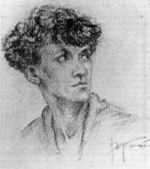
Katina G. Papa
Katina Papa (1903-1957). Katina Papa was born in the village of Giannitsates in Northern Epirus. She spent her childhood and part of her teenage years there. Following the persecution of Greeks by Turko-Albanians in the area, the Papa family sought refuge in Corfu, where Katina graduated from the Ionian Academy with honors and was awarded the World Douglas Gold Medal. She studied at the Faculty of Philosophy at the University of Athens and the Pedagogical Academy of Athens (1924-1925). She pursued further education in Austria (1930-1932), Munich, and Berlin (1938-1939) with scholarships from the Ministry of Education, specializing in Psychology and Therapeutic Education. In Vienna, she attended courses by Alfred Adler. In 1933, she studied school programs for children with special needs in Italy. She worked at the 6th Girls' Gymnasium of Athens, where she founded the first Pedagogical Counseling Station, which operated from 1933 until her resignation in 1954. Her literary debut was in 1935 with the publication of the short story collection "Under the Mulberry Tree," for which she was awarded the Vikelas Prize by the Academy of Athens. She collaborated with literary magazines such as Nea Estia, Ipirotiki Estia, and the newspaper Kerkyraika Nea. She passed away in Athens at the age of 54. During her lifetime, she published only one more short story collection titled "If Everything Changed." After her death, the chronicle "At a Girls' Gymnasium" and her poetry collection "Poems" were published, both curated by her sister, the painter Aglaia Papa. Her short stories were translated and anthologized in Germany. A large part of her work, including essays, studies, and a play titled "The Stranger," remains unpublished. Katina Papa belongs to the interwar generation of Greek literature. Her prose work is part of the effort of the Generation of the Thirties to renew traditional narrative discourse and disengage from the forms of ethnography, characterized by a deep psychological approach to characters, lyricism, the author's emotional intensity, her empathy with her characters' emotions, autobiographical elements, remarkable flexibility in plot development, and linguistic expression. For more biographical details on Katina Papa, see Melberg Margarita. "Katina Papa," Interwar Prose; From the First to the Second World War (1914-1939) Vol. VII, pp. 8-26. Athens, Sokolis, 1993. (Source: Archive of Greek Authors, EKEBI).
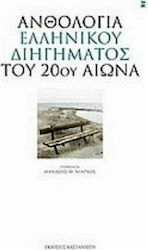
 Greek Fiction Books
 Greek Fiction Books
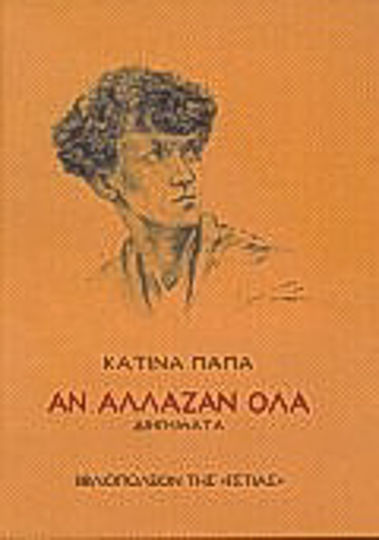 Greek Fiction Books
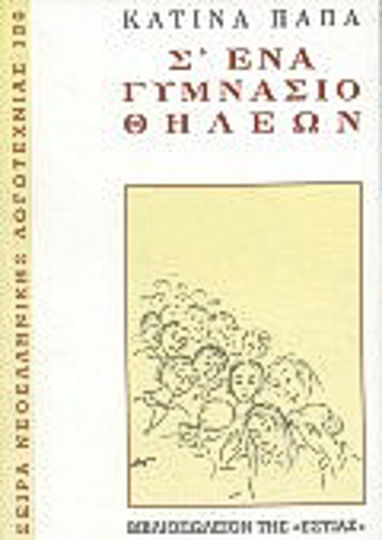 Greek Fiction Books
 Greek Fiction Books
 Greek Fiction Books