Kostas Axelos
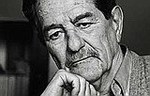
Kostas Axelos
Kostas Axelos (1924-2010) was born in Athens. Alongside his Greek secondary education, he attended classes at the French Institute of Athens and the German School. Since the so-called Faculty of Philosophy at the University of Athens did not offer satisfactory philosophy courses, he enrolled in Law, but the war shifted his focus to politics: during the German-Italian occupation, he actively participated in the Resistance and subsequently in the civil war—where the British were also militarily involved—as an organizer, journalist, and theorist of the communist movement (1941-1945). The Communist Party of Greece expelled him, and a government military court sentenced him to death. He fled to Paris at the end of 1945, boarding the ship Mataroa with the assistance of the director of the French Institute, Octave Merlier. He studied philosophy at the Sorbonne, where he defended his two doctoral theses ("Marx, Thinker of Technology" and "Heraclitus and Philosophy"). From 1950 to 1957, he worked as a researcher at the C.N.R.S. (National Center for Scientific Research) in the philosophy department. He continued his research work on his two doctoral theses on Marx and Heraclitus at the École Pratique des Hautes Études until 1959. From 1962 to 1973, he taught philosophy at the Sorbonne. He was a collaborator and later editor-in-chief of the review "Arguments" (1956-1962, Minuit editions), which was groundbreaking at the time, while also translating works by Heidegger and Lukács into French. In March 2009, during his last visit to Greece, he was awarded an honorary doctorate from Aristotle University of Thessaloniki. He passed away in Paris on February 4, 2010, at the age of 85. He published a series of books (initially in Greek and subsequently mainly in French, but also in German) that have been translated into sixteen languages. He gave lectures worldwide. Most of his texts and lectures have been included in his books. Drawing on the poetic thought of Heraclitus, and beyond Marx and Heidegger, he sought to advance, by exploring the horizon of wandering, a new thought on the game of fragmentary totality—a thought that is historical and systematic, open and multidimensional, questioning and planetary, addressing the stakes of the age of technology. The World, which after 1984 becomes the world, remains the problem, or rather the question, on which his thought focuses, inextricably linked with individual and historical-global experience: its different powers and our relations with it are questioned. Beyond closure, an opening is proposed.
0