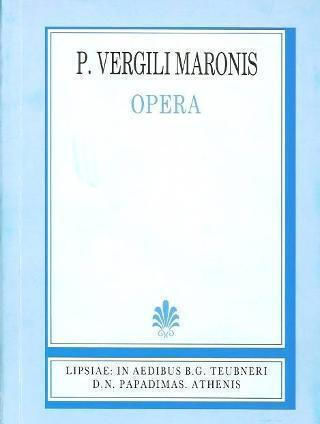
Publius Vergilius Maro
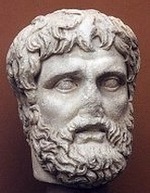
Publius Vergilius Maro
Publius Vergilius Maro (October 15, 70 BC - 19 BC), known as Virgil, was a Latin poet. His most significant work, the "Aeneid," is considered the greatest epic of the Roman Empire. Virgil was born in the village of Andes, near the city of Mantua in what is now northern Italy. His parents were of humble origin, farmers, but they ensured he received the best possible education. By the age of sixteen, he was educated in Cremona and later sent to Milan for broader studies. During this time, he showed a particular interest in Greek and Latin literature. At the age of 18, he moved to Rome with the initial intention of studying Rhetoric, Medicine, and Astronomy. However, his interest soon shifted to Philosophy, leading him to Naples, where he became a student of the Epicurean philosopher Siro. Simultaneously, he was also taught Greek. During this period, Virgil began writing his first poems and gradually devoted himself more and more to poetry. Upon returning to Rome, Virgil became friends with Maecenas (Gaius Maecenas), a wealthy Roman and patron of the arts. From 39 BC, Virgil was part of Maecenas's circle of poets and also had friendly relations with Augustus Caesar. Among Virgil's most important early works are the "Eclogues," a collection of pastoral poems written between 42-39 BC. After completing the "Eclogues," between 39-29 BC, he wrote the "Georgics," an agricultural poem in four volumes dedicated to Maecenas, describing the life and work of farmers of the time. The "Aeneid" is Virgil's most significant work. This epic poem of great historical significance was commissioned by Octavian, the first Roman emperor, whom Virgil had met through Maecenas. The "Aeneid" established Virgil as a major poet. Virgil died in 19 BC while visiting Greece. Specifically, during his visit to Megara, he contracted malaria and died on his return to Naples, in what is now Brindisi. In Virgil's will, there was an instruction not to publish the "Aeneid," but Augustus Caesar ordered its publication, recognizing the work's great value.