Petros Vlastos
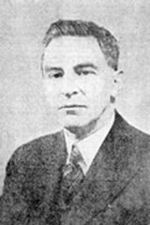
Petros Vlastos
Petros Vlastos (Calcutta, 1879 - Liverpool, 1941). Petros Vlastos was born in 1879 in Calcutta, India, the son of Theodoros Vlastos and Marietta Ralli. He studied at the Law School of the University of Athens and from 1901 to 1919 worked at the branch of the Ralli commercial house in India. Subsequently (1919-1928, when the Ralli house was sold to a foreign company), he moved to the offices of the same house in Liverpool, where he lived until his death. From 1928 until the end of his life, he devoted himself to his writing activities. In 1908, he married Aziza, the daughter of Alexandros Pallis. Petros Vlastos is among the Greeks of the diaspora who significantly influenced Greek literature during the early decades of our century. He was particularly associated with the circle of the Ralli house, which was one of the first and most important centers of the Greek demotic movement (also in this circle were Alexandros Pallis, Argyrios Eftaliotis, Dimitris Petrokokkinos, and Vlastos's brother, Ambrosios). Concurrently, Vlastos maintained regular correspondence with the founder of the demotic movement, Giannis Psycharis. He made his literary debut in 1904 with the publication of the poetry collection "Of Life," under the pseudonym Ermonas. His collection was enthusiastically received by the Athenian demotic circles and praised by Kostis Palamas. This was followed by publications of poems, short stories, critiques, political essays, studies, and travel writings. He collaborated with publications such as "Noumas," "Grammata" (of Alexandria), "Cypriot Letters," "Hellenic Leaves," "Chios Chronicles," and "Nea Estia." Apart from Vlastos's clear linguistic orientation towards Psycharis's "purification," his entire body of work is dominated by his nationalist ideological commitment, following the theory of his childhood friend Ion Dragoumis, advocating for the enlightenment of the Greeks of his time and highlighting the historical continuity of Hellenism, while simultaneously viewing the Byzantine historical period as a phase of cultural regression. For more biographical details on Petros Vlastos, see K.I.B., "Vlastos Petros," in "Great Greek Encyclopedia," vol. 7, Athens, Pyrros, 1929; Manolis Gialourakis, "Vlastos Petros," in "Great Encyclopedia of Modern Greek Literature," vol. 4, Athens, Haris Patsis, n.d. [1968]; M. G. Meraklis, "Petros Vlastos," in "Greek Poetry: Romanticists-Palama Era-Post-Palama; Anthology-Grammatology," Athens, Sokolis, 1977; Alexandros Argyriou, "Vlastos, Petros," in "World Biographical Dictionary," vol. 2, Athens, Ekdotiki Athinon, 1984; Rena Stavridi-Patrikiou, "Petros Vlastos," in "Our Older Prose: From Its Beginnings to the First World War I' (1900-1914)," Athens, Sokolis, 1997; and Karolos Mitsakis, Evdokia Paradeisi, "Vlastos Petros," in "Dictionary of Modern Greek Literature," Athens, Patakis Publishers, 2007. (Source: Archive of Greek Authors, EKEBI).
 Dictionaries
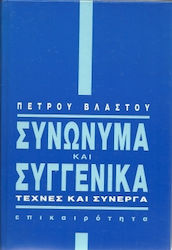
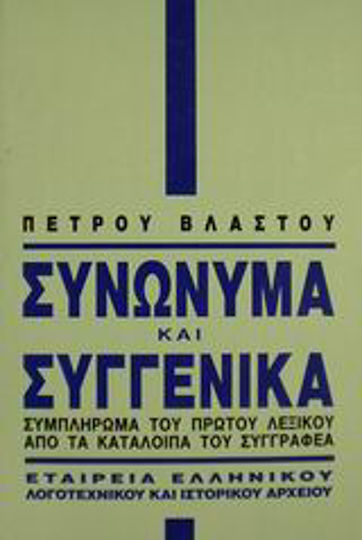
Συνώνυμα και συγγενικά, New edition supplemented by the remains of the author
Petros Vlastos
from18,00 € at 3 stores0
0