Cornell Woolrich
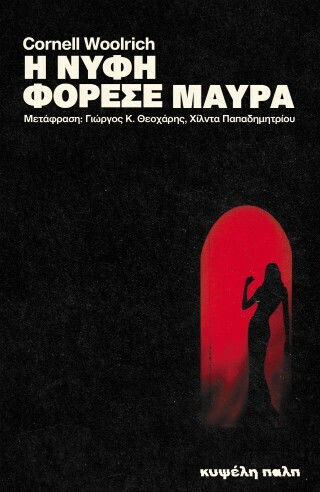
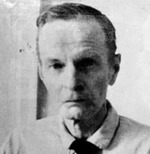
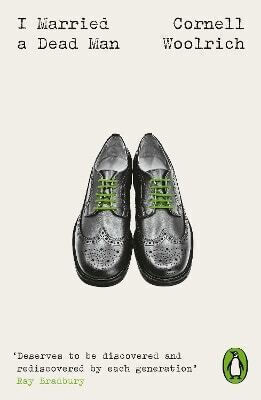
Cornell George Hopley Woolrich (who wrote several books under the pseudonym William Irish) was born in New York in 1903. He spent much of his childhood with his father in Mexico after his parents divorced when he was young. He studied journalism at Columbia College but left to write his first novel, "Cover Charge," influenced by Francis Scott Fitzgerald, which was published in 1926. This was followed by "Children of the Ritz" (1927), "Times Square" (1929), and "A Young Man's Heart" (1930). He worked in Hollywood as a screenwriter, but his time there was not successful. In 1930, his marriage to twenty-year-old Gloria Blackton, daughter of a producer, ended due to his parallel homosexuality, and he returned to his wealthy mother Claire in New York, where he began writing mystery stories for magazines such as "Argosy," "Black Mask," "Thrilling Mystery," "Detective Fiction Weekly," and "Dime Detective." Some refer to Woolrich as the "Poe of the 20th century," as his contribution is considered significant in the transition from the classic detective story to the renewed crime novel of the '40s and '50s. He wrote approximately twenty novels and over 200 novellas. His name is now listed among the "classics" of the genre, alongside Raymond Chandler, Dashiell Hammett, and James M. Cain. An alcoholic, diabetic, homosexual, self-loathing, pessimist, yet highly inspired writer, with themes consistently revolving around memory, psychological obsession, fantasy, and love, he managed to write some of the most classic noir novels, such as "The Bride Wore Black" (1940), "The Black Curtain" (1941), "Black Alibi" (1942), "Phantom Lady" (1942), "The Black Angel" (1943), "Night Has a Thousand Eyes" (1945), "Waltz into Darkness" (1947, which inspired François Truffaut's "Mississippi Mermaid"), "Rendezvous in Black" (1948), "I Married a Dead Man" (1948), which inspired corresponding films starring Edward G. Robinson, Barbara Stanwyck, Rita Hayworth, Peter Lorre, among others, as well as Alfred Hitchcock's "Rear Window." Despite this, he never managed to become truly well-known and famous. Along with a host of other "commercial" writers of his time (David Goodis, Ray Bradbury, etc.), he remained obscure, outside the narrow confines of clubs like the "Mystery Writers Association." After his mother's death in 1957, he fell into depression. He continued to write, leaving most of his works unfinished, and succumbed to complete withdrawal from life, to the point where he allowed gangrene to set in on his leg, necessitating amputation. After the surgery, he lived in a wheelchair. He died on September 25, 1968, from a stroke in his room, just two weeks after François Truffaut's unsuccessful trip to New York for the private screening of the film "The Bride Wore Black" in his honor, a film he never saw.



 Non-Greek Fiction Books