David Hume
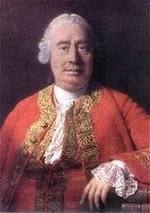
David Hume (1711-1776), the most prominent thinker of the Scottish Enlightenment, was the first in the history of philosophy to attempt an empirical foundation of the "Science of Man" by introducing the "experimental method of reasoning into moral subjects." Born in Edinburgh to a family of merchants, he and his siblings were raised solely by their devoted mother after losing their father at an early age. From a young age, Hume was passionately drawn to studying classical literature, including works by Cicero, Seneca, Lucretius, and Plutarch, and he studied at the University of Edinburgh. In 1734, he moved to the town of La Fleche in Anjou, where Descartes had studied, to focus on writing. He later returned to London to publish, at the age of 28, his first and greatest philosophical work, "A Treatise of Human Nature" (1739-40). The novelty of his ideas drew critical rejection from his contemporaries, who labeled him an atheist and an extreme agnostic. This led the Scottish philosopher to rewrite the work as "Enquiries concerning Human Understanding and concerning the Principles of Morals" (1748, 1751), where he softened the skeptical sharpness of some conclusions from the "Treatise," without ever abandoning the fundamental positions of his "youthful" work. He went on to publish "Essays Moral, Political, and Literary" (1741-52), "Four Dissertations," which included "The Natural History of Religion" (1757), and the six volumes of "The History of Great Britain" (1754-1762). In 1763, he served at the British Embassy in Paris until 1769, after which he returned to Scotland to retire and write "Dialogues Concerning Natural Religion" and "My Own Life," both published posthumously after his death in 1776.