Alexandros Pallis
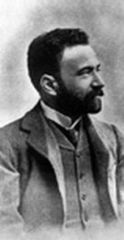
Alexandros Pallis
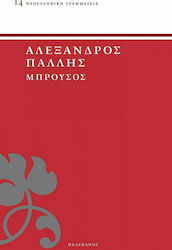
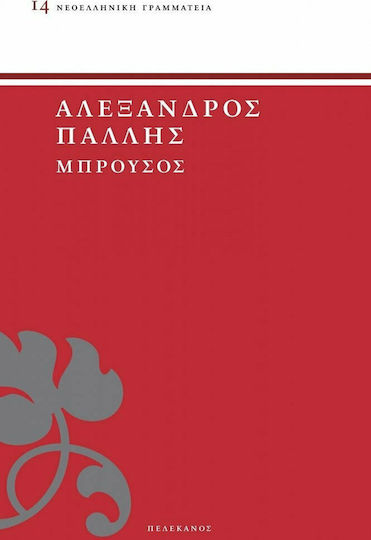
Alexandros Pallis (1851-1935). Alexandros Pallis was born in Piraeus, although his family hailed from Ioannina in Epirus. His father, also named Alexandros, was a justice of the peace in Piraeus, and his mother, Panagiotitsa née Koskouri, came from a lineage of fighters from Mystras. He never met his father, who passed away before his birth. After her husband's death, Panagiotitsa moved to Plaka with her four children (Anastasis, Agamemnon, Alexandros, and Aspasia). Pallis completed his secondary education in Athens and attended the Faculty of Philosophy in Athens in 1869, but had to interrupt his studies due to financial difficulties and moved to Manchester, England. Initially, he worked at his aunt's store, the widow of Christos Parmenides, but after marrying the daughter of Pantias Rallis, he joined the Rallis Brothers' commercial house and later moved to Bombay, India, where he befriended Argyrios Eftaliotis and D.P. Petrokokkinos. With his wife, he had five children. From 1894, he settled in Liverpool, where he remained until his death in 1935. Pallis is primarily known as a pioneer, alongside Psycharis and Eftaliotis, in the demotic language movement. His entire literary work, both original and translated, is dedicated to the defense of the demotic Greek language. He was also a major financial supporter of the demotic movement, aiding writers and journalists such as Palamas, Xenopoulos, Philintas, and P. Nirvanas, as well as publications like Noumas, Laikos, Akropolis, and book and pamphlet editions related to the language issue. His original literary work consists of two poetry collections and a narrative. Noteworthy is his writing of children's poems in demotic Greek in his collection "Songs for Children," and his use of the style of folk songs in his second collection titled "Tambouras and Kopanos." His narrative "Brousos" aligns with the tradition of Psycharis's work "My Journey" and the broader literary trend of didactic prose. However, Pallis was mostly engaged in literary translation, aiming to showcase the expressive adequacy of the demotic language in all forms of written expression. His most famous translations are of Homer's "Iliad" and the New Testament (titled "New Testament"), which was published in the newspaper Akropolis from September 9 to October 20, 1901, sparking reactions from ecclesiastical circles and opponents of the demotic movement. These reactions led to the violent student clashes in Athens, known as the "Evangelika," which resulted in the resignation of the Theotokis government and the Archbishop. He also translated works of ancient tragedians, Shakespeare, as well as philological, philosophical, historical, and other scientific studies. A significant portion of his work was compiled in "Hollow Nuts" (Liverpool 1915) under the pseudonym Lekas Arvanitis Malliaros. For more biographical details on Alexandros Pallis, see Anemoudi-Arzoglou Christa, "Pallis Alexandros," World Biographical Dictionary 8. Athens, Ekdotiki Athinon, 1988, and Paganos G.D., "Alexandros Pallis," Our Older Prose Tradition: From its Beginnings to the First World War VIII (1880-1900). Athens, Sokolis, 1997, Meraklis M.G., "Alexandros Pallis," Greek Poetry; Romantics - Era of Palamas - Post-Palamas; Anthology - Literary History, pp. 270-274. Athens, Sokolis, 1977, n.p., "Pallis Alexandros," Great Encyclopedia of Modern Greek Literature 11. Athens, Haris Patsis, n.d. and "Chronology of Alexandros Pallis," Diavazo 118, 8/5/1985, pp. 16-18. (Source: Archive of Greek Authors, EKEBI.)
0