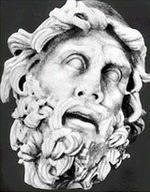
Omiros
Ancient Greek epic poet, regarded as the greatest poet of all time, with whom both Greek and European literature begin. Information about Homer is scarce and often unclear. Many cities claim to be his birthplace, but Smyrna, an Aeolian colony later added to the Ionian League, is considered the most likely. This view is supported by the poet's detailed knowledge of the region, as evidenced by the similes used in his poetry. He was also familiar with the coasts of the Adramyttian Gulf, Mount Ida, the plain of Scamander, etc., which he saw with his own eyes and which became the settings for the battles of his heroes. The exact time when Homer lived is unknown. In his poems, he implies that he lived long after the Trojan War. According to Herodotus (Book 2, Chapter 53), Homer lived 400 years before him, which would place him in the mid-9th century BC. The tradition that Homer was blind should be dismissed, as it is incompatible with the detailed observation of nature found in his work.
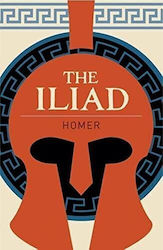
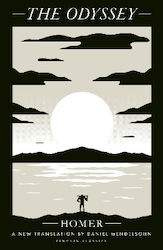
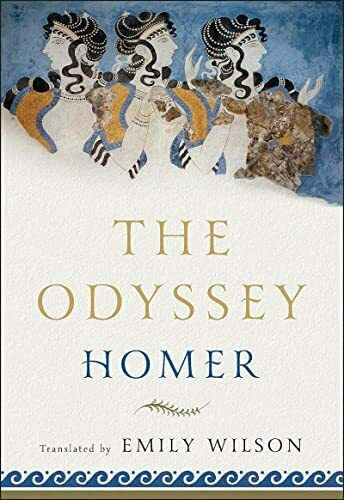
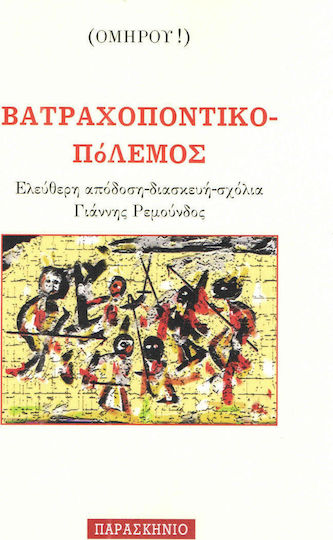
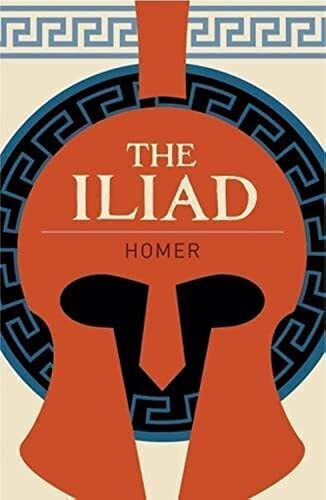
He wrote: a) the "Iliad," whose plot unfolds over 51 days and comprises 15,700 lines. Its theme is the "wrath of Achilles" against Agamemnon and the subsequent misfortunes. It should have been named "Achilleid," but since the poet intersperses many events of the war around Ilium (Troy), it was named "Iliad." b) the "Odyssey," whose events last 41 days and are developed in 12,100 lines. Its theme is the "nostos" (return) of Odysseus from Troy to Ithaca. Other works attributed to Homer include the "Homeric Hymns," the "Batrachomyomachia," and the "Margites."
A characteristic of Homer's art is that his epics have a beginning, middle, and end, and through successive episodes, he maintains the listener's interest until the end. Admiration for Homer's epics has remained undiminished from antiquity to the present day, which is why they are taught in all European schools as he is considered the greatest poet and educator of all time. The Homeric epics have been translated into all the world's languages, as well as into the Greek vernacular by I. Polylas, Arg. Eftaliotis, Z. Sideris, N. Kazantzakis, I. Kakridis, and others.