Sandro Penna
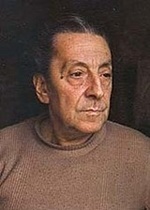
Sandro Penna
Sandro Penna was born in Perugia on June 12, 1906. In 1929, he settled in Rome, a city that had been the destination of his frequent youthful wanderings. He lived there for the rest of his life (except for a period in Milan where he worked as a bookstore clerk), engaging in various and random professions. He passed away in Rome on January 23, 1977. "Life... is to remember..." was the first poem he wrote (as he mentions in an autobiographical note), scribbled in the margin of a newspaper one evening by the sea at the age of 22, at a time when "I wasn't even aware of the existence of poetry." That "first" poem was found among the papers he left behind at his death, typed with the date 24-8-1922. We know that Penna was writing long poems influenced by D'Annunzio even as a high school student. That "first" poem retains all our admiration because we know it was born not from a miracle, but from "knowledge" acquired through struggle and study. "As soon as I gathered a few poems," he continues in the autobiographical note, "I happened to read in a newspaper that the greatest poets were three: Saba, Ungaretti, and Montale. Knowing that Saba had a bookstore in Trieste on San Nicolo Street, I told myself: Here is who I will send my poems to, to tell me if they are worth anything. The answer came immediately..." Penna's poetry, from that fortunate beginning, does not evolve. It repeats in a limited variety of sounds and tones, achieving a series of transparencies unprecedented in Italian poetry of our century. However, while his work has only in recent years spread beyond the "elite" of specialists and gained readership among the general public, the difficulty of categorizing Penna's poetry remains. Perhaps because what he expresses is barely articulable, a secret that cannot be repeated, only felt. Antonio Porta writes: "Penna shows us to a great extent the 'indefinable' with which poetry is made: and also that it can only be defined by itself." Sandro Penna exerted a significant influence on the poets of the so-called "Roman School."
0