Frank Wedekind
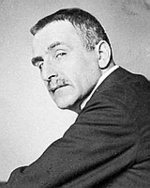
Frank Wedekind
Frank Wedekind was born in Hanover on July 24, 1864. At the age of 13, in 1877, he wrote his first play, "A Scene from the Orient" ("Eine Szene aus dem Orient"). Between 1879 and 1880, he wrote his second play, "The Desperate Ones" ("Die Verzweifelten"), and in 1882, "The Symposium of Socrates" ("Das Gastmahl bei Socrates"). In 1884, he completed his baccalaureate and began studying German and French literature at the University of Lausanne. Shortly after, at his father's urging, he moved to Munich to study law. There, he frequently visited theaters, operas, and concert halls. In 1886, he wrote "The Quick Painter" ("Der Schnellmaler oder Kunst und Mammon"), which was published in Zurich in 1889. Wedekind decided to dedicate himself to literature, a decision that led to a rift with his father when he abandoned his studies. In 1887, he began writing a verse comedy, which remained unfinished, titled "Elin's Awakening" ("Elins Erweckung"). This work foreshadowed "Spring Awakening" and "Lulu." He reconciled with his father, who allowed him to stay in Zurich and pursue his literary interests. In October 1888, his father passed away, and the inheritance enabled him to pursue a career as an independent writer. In 1889, he wrote "Children and Fools" ("Kinder und Narren"). In 1890, he began writing "Spring Awakening," which was published a year later. From 1892 to 1894, he lived in Paris. With his financial resources depleted, he was hired as a secretary by a Danish sculptor. During this time, he wrote "The Phantom of the Sun" ("Das Sonnenspectrum"), "Pandora's Box," the first version of "Earth Spirit," and "The Love Potion" ("Der Liebestrank"). In Munich, between 1896 and 1897, he reluctantly collaborated under the pseudonym Hieronymus Jobs with the famous newspaper "Simplissimus." Although he was gradually making a name for himself as a writer, he struggled to have his plays performed in theaters. In 1897, he published a collection of novellas, poems, and pantomimes titled "Princess Rusálka" as well as "The Young People" ("Der junge Welt"), a new version of "Children and Fools." During this period, Wedekind reunited with Frida Strindberg, who was going through a divorce. They had a child together, Friedrich Strindberg. Thanks to his friend Kurt Martens, in 1898, he was hired as a general secretary, actor, and director at the Leipzig theater founded by Karl Heine, the Ibsen-Theater. He worked there under the pseudonym Heinrich Kammerer. The premiere of "Earth Spirit" was held on February 25, directed by Karl Heine. After the dissolution of the troupe, Wedekind was hired as a playwright, actor, and director at the Munchner Schauspielhaus, directed by Georg Stolberg. The revival of "Earth Spirit" was a failure. "Simplissimus" was confiscated for publishing two of Wedekind's poems satirizing Emperor Wilhelm II. The author and publisher were prosecuted for lèse-majesté (offense against the king). Wedekind fled to Zurich and then to Paris, where he began writing "The Marquis of Keith." In June 1899, he returned to Leipzig and surrendered to the authorities. He was imprisoned from September 1899 to February 1900. In December 1899, the premiere of "The Opera Singer" took place in Berlin. In September 1900, the premiere of "The Love Potion" was held at the Pfauentheater in Zurich. He is connected with Hildegard Zellner, with whom he has his second son, Frank, in 1903. "The Marquis of Keith" premieres in Berlin but is unsuccessful. The premiere of "C'est la vie" takes place in 1902 at the Schauspielhaus in Munich, which is a reprise of "The Marquis of Keith" with Wedekind himself in the lead role. In December 1902, Max Reinhardt's Kleines Theater stages "The Spirit of the Earth." In 1903, he writes "Hidalla," the first draft of his work "Karl Hetman." In 1901, he publishes the first three chapters of an unfinished novel titled "Mine-Haha," which he began writing in 1895. On May 1, 1906, Wedekind marries the twenty-year-old Tilly Newes. On May 2, they perform together in Nuremberg in "The Dance of Death," which is immediately banned. "Spring Awakening" is performed at the Kammerspiele and achieves great success. In 1908, he writes "Oaha," a "satire of satire," which premieres much later in 1911. Publisher Albert Langen sees himself in the main role of the work and falls out with the author. Georg Müller acquires the rights to his works. The premiere of "New People" is held at the Munchner Schauspielhaus. From 1909 to 1912, he acts in his own plays but faces increasing censorship issues. He writes "The Philosopher's Stone" in 1909, premiering in 1913, "The Tower of Biberstein" in 1910, which is censored, and "Francesca" in 1911, premiering in 1912. His daughter, Kadidja, who will become an actress, director, and writer, is born on August 6, 1911. Wedekind writes and publishes "Samson or Shame and Jealousy," premiering in 1914, and "Bismarck" in 1915. In 1916, the premiere of "The Express Painter" is held in Munich. He also writes a new version of "Oaha" titled "Till Eulenspiegel." In 1917, excerpts from his "Hercules" are published in the Berliner Tageblatt. The premiere of "The Tower of Biberstein" is held at the Pfauentheater in Zurich. Wedekind suffers from the consequences of a poorly performed appendectomy since 1914 and requires another surgery. The couple is not doing well, and Tilly seeks a divorce and attempts suicide. Wedekind dies on March 9, 1918, after the surgery. His burial in Munich causes confusion, mainly due to the unexpected turnout of people.
-

Art Books
-

Non-Greek Fiction Books
-

All categories