Isiodos
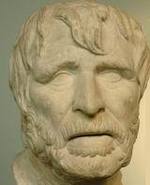
Ancient Greek poet of didactic epic (750-700 BC). Son of Zeus and Pycimede, he was born in Aeolian Cyme. His parents were poor, which led them to move to Boeotia, where they cultivated a small farm on the slopes of Mount Helicon, in the village of Ascra, near Thespiae. However, their financial situation did not improve significantly, as the land there was poor and the climate harsh. According to tradition, the young Hesiod, while tending his sheep on Helicon, was visited by the nine Muses who bestowed upon him the gift of singing about the past and the future with a sweet voice. After his father's death, his brother Perses bribed the judges during the division of the paternal estate and received a larger share than Hesiod. However, being lazy and wicked, Perses squandered his inheritance and threatened to seize his brother's share through new lawsuits. Inspired by these events, Hesiod wrote the poem "Works and Days," where, after invoking the Muses, he addresses Perses, trying to dissuade him from litigiousness and guide him towards work, as labor and the profit derived from it are beneficial, while the gods grant no goods to man without sweat. The poem concludes with the famous maxim: "Work is no disgrace; idleness is a disgrace." As for the poetic contest between Hesiod and Homer, in which the former allegedly won, it is undoubtedly a fictional creation that emerged in the educational environment of the 5th century BC, where discussions about the value of didactic and heroic epic, first initiated by Aristophanes in "Peace," took place. For Hesiod was certainly later than Homer.
Of Hesiod's many poems, the following survive: a) "Works and Days." Verses 1-764 constitute the "Works," named so because the poet advises on labor, which is the sole path to human happiness. The remaining verses (765-828) deal with auspicious and inauspicious days, which account for the second part of the title "Days" and are considered a later addition. b) "Theogony" (1022 verses). In this, the poet attempts to systematically and harmoniously record the various Greek myths related to the genesis, ranks, and overall history of the Greek gods. c) "Shield of Heracles" (480 verses). d) "Catalogues of Women" (54 verses).